
Reviewed · SORRENTO
Sorrento through the eyes of a local
Turn Sorrento into a story, fast. This 2-hour walk goes beyond the main streets, guided by locals who point out where history lives in everyday details. I especially like the free limoncello break and the chance to step into places most people walk past, like the garden inside O’ Parrucchiano. One thing to consider: it is still a walking route through old lanes and several stops, so plan your energy for an active, on-foot morning or afternoon.
The best part is how it feels less like sightseeing and more like being handed a map in words. Guides such as Camilla (and other guides like Alessandra on different dates) bring personal hints, explain what you are actually looking at, and keep the pace comfortable rather than rushed. You end up understanding why Sorrento’s corners matter, not just what they are called.
It is also good value for the time, because the walk includes more than viewpoints. You get guided access to interiors such as the cathedral area and cripta, plus a local tasting, plus a peek behind the scenes at craft and gardens that are not obvious from the street.
In This Review
- Key things I’d bookmark before you go
- Piazza Tasso, Torquato Tasso statue, and why the start matters
- The Pity Road and a deconsecrated church where craft happens
- Sorrento Cathedral and the 800s nativity you can actually visit
- O’ Parrucchiano’s pergola garden, and why it feels like a secret
- Villa Fiorentino (outside), Sedil Dominova, and the art-meets-people shift
- Limoncello stop in the middle, plus Piazza della Vittoria views
- Cloister of St. Francis graffiti, Comunal Villa coast views, and St. Antonino cripta
- Mills Valley farewell walk, and how to use the momentum
- Price and value: what $30 buys you in real terms
- Who this tour suits best
- Should you book this Sorrento local walk?
- FAQ
- Where is the meeting point?
- How long is the tour?
- Is the tour wheelchair accessible?
- What is included in the price?
- Do you get to enter any buildings?
- Is the tour guided in English?
- What happens if I am late?
- What are the cancellation and payment options?
Key things I’d bookmark before you go
- Meeting at Piazza Tasso near the statue of Torquato Tasso, so you start oriented in the town’s center.
- The Pity Road experience, a very narrow old lane where carriages once passed.
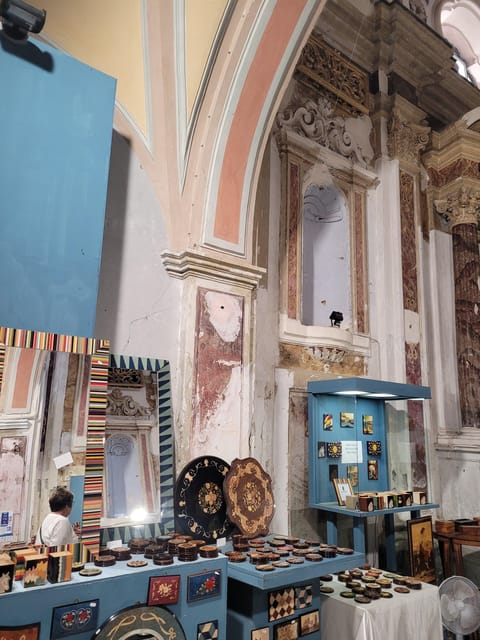
- Inlay making in a deconsecrated church, a practical look at how Sorrento craft shows up in real life.
- O’ Parrucchiano’s hidden garden pergola, a private-feeling courtyard you would miss on your own.
- Free limoncello tasting paired with local sweets, with the break placed right in the middle of the walk.
- Church interiors and the cripta of St. Antonino, plus big-coast views from Comunal Villa.
Piazza Tasso, Torquato Tasso statue, and why the start matters
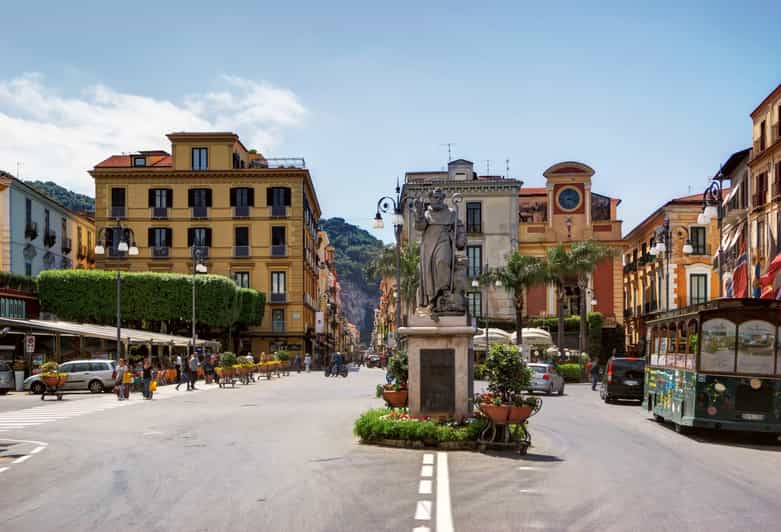
Most Sorrento walks begin somewhere convenient. This one begins somewhere meaningful: right in front of the statue of Torquato Tasso in Piazza Tasso, next to Bar Fauno. That matters because it anchors you in the town’s main square right away, when everything is still new and confusing.
From the meeting point, your guide explains the plaza’s role and what the statue represents, then you move on before you’ve had time to get stuck in a loop of the obvious streets. I like that approach, because it helps you connect early details to later stops. By the time you reach the narrow lanes, you are already thinking like a local, not like a tourist scrolling a checklist.
If you are a few minutes late, send a message, because the walk is time-based and the meeting point is specific.
The Pity Road and a deconsecrated church where craft happens
After Piazza Tasso, the tour heads toward the Pity Road, described as an ancient and very narrow path where carriages once passed. This is the kind of Sorrento detail that makes old towns feel real. You see the street as a physical problem, not just a pretty photo angle.
Next comes a stop tied to Sorrento craft. You’ll see how Sorrento inlay is made inside an older deconsecrated church. That is a big deal for understanding the town’s identity, because inlay work is not a museum subject. It is part of what locals make, sell, and talk about.
A practical consideration: because these are working areas and historic spaces, expect a slower rhythm than a normal “walk-and-go” route. It is worth it, though. You are learning the story behind a style you will see on souvenirs throughout the region.
Sorrento sits above the bay, but Capri, Positano, and Pompeii are all a short ride from here.
- Sorrento: Exclusive Capri Boat Tour and Optional Blue Grotto
★ 4.8 · 3,170 reviews - Sorrento Farm and Food Experience including Olive Oil, Limoncello, Wine tasting
★ 5.0 · 2,524 reviews - Capri Blue Grotto Small-Group Boat Day Tour From Sorrento
★ 4.5 · 2,511 reviews - From Sorrento/Nerano: Amalfi and Positano Boat Tour
★ 4.6 · 2,440 reviews
Sorrento Cathedral and the 800s nativity you can actually visit

Sorrento Cathedral is next, with time to look inside and see a nativity dating from the 800s. This is one of those stops that works well for mixed interests. Even if you do not consider yourself a church person, the nativity gives you something concrete to focus on, and it helps you read the town’s religious art tradition.
Why I like this part of the tour: it is not only about admiring a building from the outside. You are inside, so the scale and feeling land differently. Also, it helps break up the street-walking time, which keeps the whole experience from feeling like one long sidewalk sprint.
O’ Parrucchiano’s pergola garden, and why it feels like a secret
Here’s where the tour really leans into the local advantage. You will visit a hidden garden inside the O’ Parrucchiano restaurant. The highlight is the famous Italian pergola, a structure that creates shade and atmosphere in a space that feels tucked away from the main crush of town.
This is the kind of stop that people miss on their own because it is not an obvious “walk-up and see” attraction. You only find it by being with a guide who knows where visitors should be allowed and where they should look closely.
You should also think of this as more than a scenic break. It is a chance to slow down, take photos without rushing, and feel how the town’s social life connects to places that do not always show up on standard itineraries.
Villa Fiorentino (outside), Sedil Dominova, and the art-meets-people shift
Next, you get Villa Fiorentino from the outside. The building is associated with art exhibitions, and the tour mentions that it has hosted famous works by artists such as Dalì and Picasso. Even without entering, it’s a useful reminder that Sorrento has always been more than a seaside town. It has had cultural gravity for a long time.
Then you head to Sedil Dominova, described as an old meeting point in the heart of Sorrento. This is one of the best “turn your brain on” stops. Instead of only looking at architecture, you start thinking about where people gathered, waited, debated, and socialized.
In my view, this middle section is a good balance: craft and sacred art earlier, then a more everyday town-history angle. That helps you keep the walk feeling varied, not repetitive.
Not done with the peninsula yet? A few more stops worth booking.
Limoncello stop in the middle, plus Piazza della Vittoria views
After Sedil Dominova, the walk becomes more relaxed for a moment. You’ll have a refreshing break to try Sorrento limoncello, with local sweets also mentioned as part of the free tasting experience. The timing matters here, because it gives your feet a reset while you still have the “momentum” of the tour.
Then you move to Piazza della Vittoria to enjoy the panorama. Views are great, but what makes this one useful on a guided walk is context. You are not just looking out randomly. Your guide helps you connect what you see to where you have already walked and what comes next.
Cloister of St. Francis graffiti, Comunal Villa coast views, and St. Antonino cripta

From the views, the route shifts again, to the cloyster of St. Francis, where you will see modern graffiti art tied to a famous singer. This stop is a reminder that Sorrento is layered. Old religious spaces are living spaces now, and contemporary art can make you look at stonework in a new way.
After that, you head to Comunal Villa, described as a place where you can see the whole Sorrento coast. If you like photos, this is a strong payoff point because the view helps you put the day into perspective.
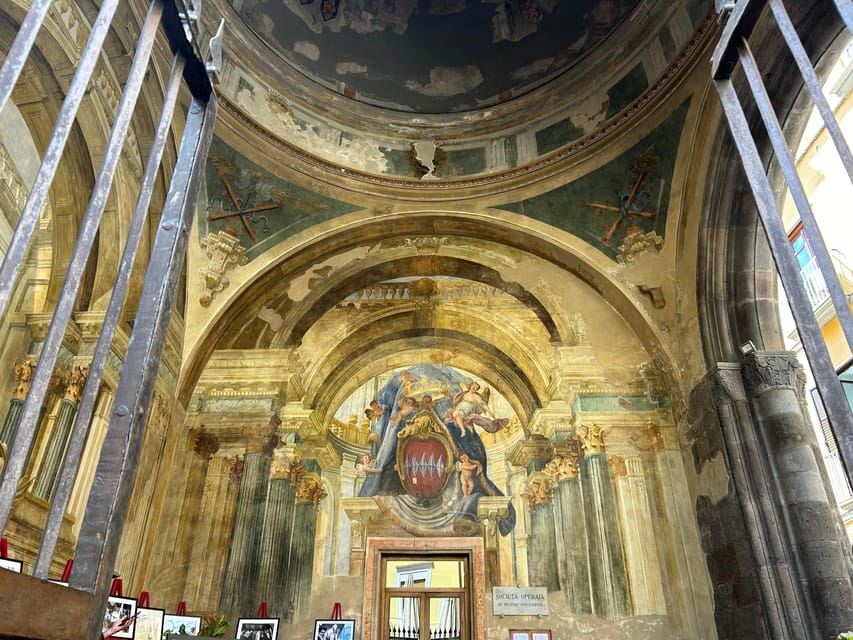
Next comes St. Antonino church and a visit to the cripta. This is a classic “slow down and pay attention” moment. The cripta is not just a pretty add-on. It changes the mood of the walk by going underground into a quieter, more intimate side of the town.
One note for your planning: because the tour includes multiple church interiors, bring the same respect you would for any sacred space. Keep your voice down, move at a sensible pace, and you will get more out of it.
Mills Valley farewell walk, and how to use the momentum
Finally, you walk up toward the Mills Valley, where the tour ends. Even without turning this into a long hike, the climb gives you a sense of Sorrento’s geography and why the town is set up the way it is.
I also like ending with a gradual sense of “the edge” of town rather than cutting straight back to the starting square. It helps the whole experience feel like a real route, not a loop.
Price and value: what $30 buys you in real terms
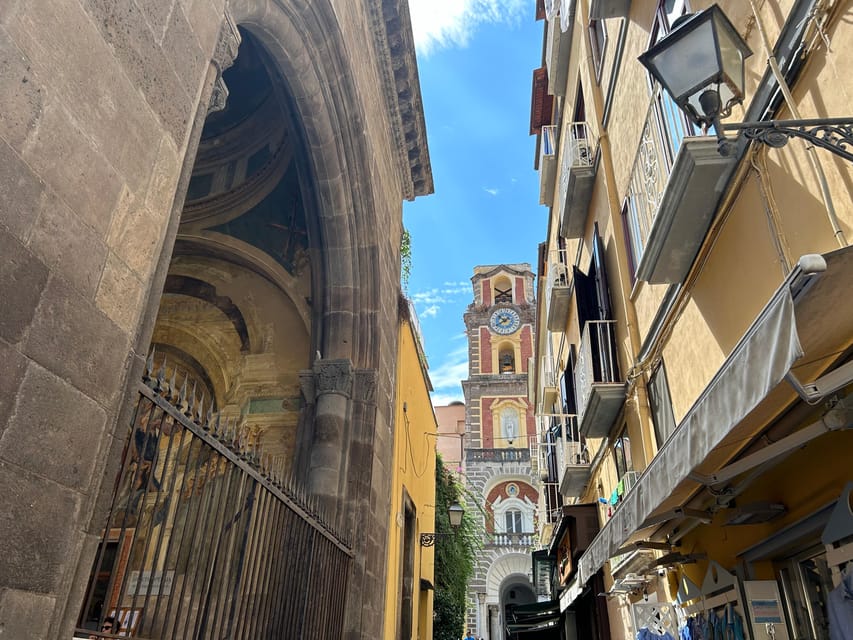
At about $30 per person for a 2-hour guided walking tour, you are paying for three things that matter in Sorrento:
- A guide who can explain what you are seeing, including small details like the meaning of the plaza and the craft process behind Sorrento inlay.
- Access and atmosphere, especially the garden inside O’ Parrucchiano that you would not naturally find unless you are brought to it.
- Food and drink value, since you get a free limoncello tasting plus local sweets.
If your plan is mostly self-guided browsing, the price might feel steep. But if you want the town’s “why” alongside the “what,” it starts to look like a good deal, especially because the tour does not end at one viewpoint. It strings together crafts, churches, gardens, and key meeting places in a way that would take you much longer to assemble on your own.
Who this tour suits best
This walk is a great fit if you:
- Want Sorrento to feel local, not like a scrolling feed of landmarks.
- Like history explained in plain language, with personal hints from a guide who loves the town.
- Care about experiences that are hard to find solo, like the hidden garden stop.
It is also a good pick if you enjoy a steady pace. Reviews highlight that the walk feels fun and never rushed, and guides keep things moving without feeling like you are being dragged from one stop to the next.
Should you book this Sorrento local walk?
Book it if you want a guided route that adds meaning, especially through craft, interiors, and the pergola garden at O’ Parrucchiano. The free limoncello tasting and the focus on walkable, distinctive corners make it more satisfying than doing only the main sights.
Skip it only if you are looking for a purely relaxed, do-whatever-you-want stroll with no scheduled stops. This is structured, and you will be moving from place to place with a guide leading the story.
If you are on your first trip to Sorrento and want to get your bearings in a way that actually sticks, this is the kind of tour that helps you understand the town in two hours, not two days.
FAQ
Where is the meeting point?
You meet right in front of the statue of Torquato Tasso in Piazza Tasso, near Bar Fauno.
How long is the tour?
The tour lasts about 2 hours.
Is the tour wheelchair accessible?
Yes, the tour is listed as wheelchair accessible.
What is included in the price?
It includes a guided walking tour and a free taste of limoncello, plus access to the garden area inside O’ Parrucchiano.
Do you get to enter any buildings?
Yes. The route includes visits such as Sorrento Cathedral (including the nativity from the 800s) and St. Antonino church and its cripta, plus the special garden area inside O’ Parrucchiano.
Is the tour guided in English?
Yes, the live tour guide speaks English.
What happens if I am late?
If you are late, you should send a message.
What are the cancellation and payment options?
There is free cancellation up to 24 hours in advance for a full refund, and you can reserve now and pay later.