
Reviewed · HERCULANEUM TOURS FROM SORRENTO
Guided tour of Hercunaleum with light lunch and entrance ticket
Vesuvius buried more than buildings. On this guided day from Sorrento, you walk the preserved streets and houses of UNESCO-listed Herculaneum, smothered in ash and pumice in A.D. 79. Your local guide ties the ruins to daily life and Roman worship, including the role of Hercules in the city’s story.
I love the guided focus that keeps your stops meaningful, with clear explanations as you move from baths and shops to grand houses and sacred spaces. I also like that the day includes wine tasting and a light lunch, so you taste Vesuvius before your archaeology-heavy afternoon.
One thing to consider: this is about 7 hours total and you’ll be doing steady walking on an archaeological site, so plan for heat and take your time with breaks, especially in summer.
In This Review
- Key highlights at a glance
- A Roman city preserved by ash and time
- Day-of logistics from Sorrento and what the 7 hours feel like
- Sirens and Vesuvius wine before Ercolano
- Inside the archaeological park: your guided 1.5-hour Herculaneum walk
- The houses and sacred spots you will see (and what each one teaches)
- Public life, faith, and grand decoration at the Sacello degli Augustali
- Luxury and sea-facing life at Casa di Nettuno e Anfitrite
- Deer statues and a freed person’s garden vibe at Casa dei Cervi
- The largest house so far at the House of the Hotel
- The Black Salon and the waxed tablets story at Casa del Salone Nero
- The skeleton house and what it reveals at Casa dello Scheletro
- Mosaics and myth translated into home walls at the Casa of Neptune and Amphitrite
- Where all those houses fit: a city of many kinds of rooms
- Lunch and wine: local products without derailing the day
- Price and value: what you’re really paying for
- Who this Herculaneum day is best for
- Should you book this guided Herculaneum day?
- FAQ
- How long is the guided Herculaneum tour?
- What’s included in the price?
- Is entrance to Herculaneum included?
- How large is the group?
- Where does the tour start?
- Will I receive a ticket in advance?
- What languages are available for the guide?
- What happens if the weather is bad?
- Is free cancellation available?
Key highlights at a glance
- Small group size (max 30) and a semi-private coach that keeps the day from feeling chaotic
- Reserved entrance for Ercolano, so you spend more time inside the park
- 1.5 hours guided walking through Herculaneum’s best-preserved streets and buildings
- Stops built around real Roman life, from baths and mosaics to household shrines
- Wine tasting and light lunch with local products, timed so you don’t lose your day to logistics
- A stop at a Vesuvius DOC producer, plus a panoramic Sorrento start point
A Roman city preserved by ash and time
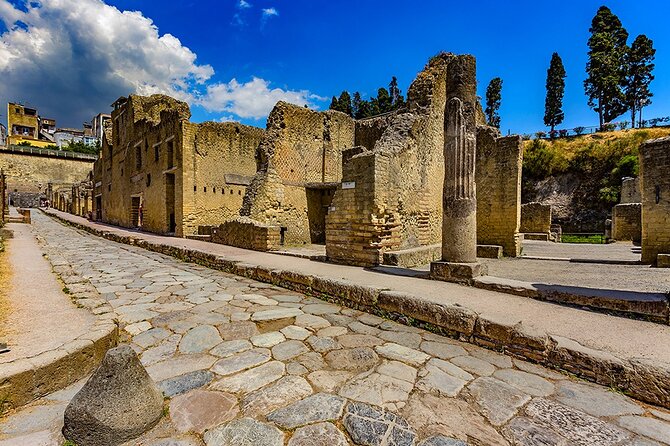
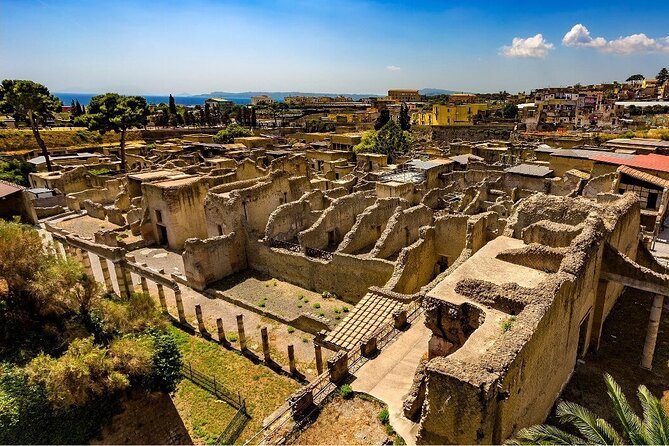
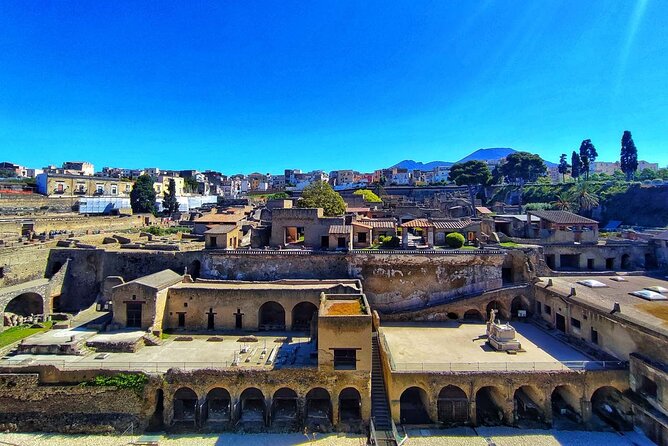
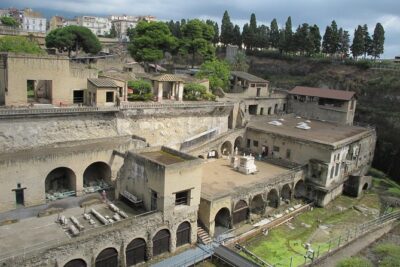
Herculaneum is the kind of place that stops you mid-step. Not because it is huge, but because so much of it is still there in place, like the city got paused. In A.D. 79, Vesuvius covered this Roman town in meters of ash and pumice, and the result is rare: you can walk through the layout of neighborhoods, not just look at a few monuments.
What makes this tour feel different from a typical “ruins and photos” outing is how the guide frames what you’re seeing. You’re not only learning dates and names. You’re also seeing how people lived with religion in the background of everyday spaces. Hercules matters here, too. Tradition ties Hercules to the city’s origin, and that theme shows up in the sacred decoration you visit.
And since Herculaneum sits on the slopes of Vesuvius, you’ll get a sense of the terrain that shaped both the view and the disaster. You start up in Sorrento, then head into the Ercolano archaeological area, where preservation does the storytelling for you.
Day-of logistics from Sorrento and what the 7 hours feel like
The tour starts at Bar Kontatto in Sorrento, on Corso Italia. The plan runs about 7 hours, with the schedule flexible due to local traffic, and the tour only runs in favorable weather. That matters because you’ll spend real time outdoors at the archaeological park.
You’ll travel by semi-private coach with air conditioning. That’s a practical win if you’re doing this as a day trip, because it cuts down the stress of coordinating transport and timing your own entrance tickets.
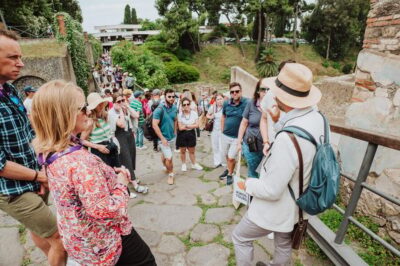
Your group is capped at 30 travelers, which helps. Large groups are slower, and slower ruins visits means less time soaking up details. Here, the flow is built around a guided route through the main stops, including entrances reserved for the site area.
Tip: wear comfortable shoes and plan for sun. This is exactly the kind of day where your feet will remember what you wore in the morning.
Smaller than Pompeii, just as frozen in time
- Guided Day Tour of Pompeii and Herculaneum with Light Lunch
★ 4.5 · 311 reviews - Sorrento: Pompeii & Herculaneum Tour with Skip-the-Line
★ 4.6 · 125 reviews - Pompeii, Herculaneum and Winery on Vesuvius with an Archaeologist
★ 5.0 · 89 reviews - Herculaneum: 2-Hour Skip-the-Line Tour from Sorrento
★ 4.0 · 46 reviews
Sirens and Vesuvius wine before Ercolano
Before you even reach Herculaneum, the day gives you two “Vesuvius context” moments, one visual and one taste-based.
First is a quick start at Bar Kontatto with Sorrento as your backdrop. Sorrento sits on a tufaceous rock overlooking the sea, and the view helps you understand why ancient stories stuck there. The tour frames the coastline as the land of the mythical sirens, the figures tied to sailors and temptation.
Then you head to Tenuta Sorrentino Vesuvio, a Vesuvius Park wine estate founded in 1990. The focus is on Vesuvius wine, including Lacryma Christi, described as the most famous wine from the volcano. It’s produced as a DOC product, so you’re tasting with a sense of place rather than just buying a bottle because it’s easy to find.
This stop is about an hour, and it’s not meant to be a long, technical lecture. It’s a way to set the tone: Vesuvius is not only the name on the ruins. It is living geology in the local product.
If you like wine but hate feeling rushed, this timing is pretty reasonable. It gives you a break before the walking starts in Ercolano.
Inside the archaeological park: your guided 1.5-hour Herculaneum walk
The centerpiece is the Parco Acheologico di Ercolano, where the tour visits Herculaneum with an authorized archaeological guide for about 1.5 hours. That time is long enough to see multiple types of spaces, without dragging you through the park like a human bookmark.
What you’re walking through is a city of streets, houses, and villas that remained remarkably preserved after the 79 A.D. eruption. The guide uses the buildings as evidence for daily life. You’re looking at physical remains that help reconstruct how people moved, worked, bathed, shopped, and worshiped.
This is also where the tour earns points for how it is explained. The experience is built around good, straightforward interpretation, so you’re not just reading plaques. You’re getting the “why” behind what you see.
Practical note: the houses and rooms you visit can be tight. Keep an eye on where the group is directed and follow the guide’s rhythm. Trying to sprint ahead for photos often backfires, because you’ll miss the explanation tied to a specific fresco, mosaic, or floor layout.
The houses and sacred spots you will see (and what each one teaches)
The day is structured as a route through the most memorable parts of Herculaneum. Each stop has a specific theme, and that theme helps you remember what you saw later. Here’s how the main highlights fit together.
Break for lunch between stops
Public life, faith, and grand decoration at the Sacello degli Augustali
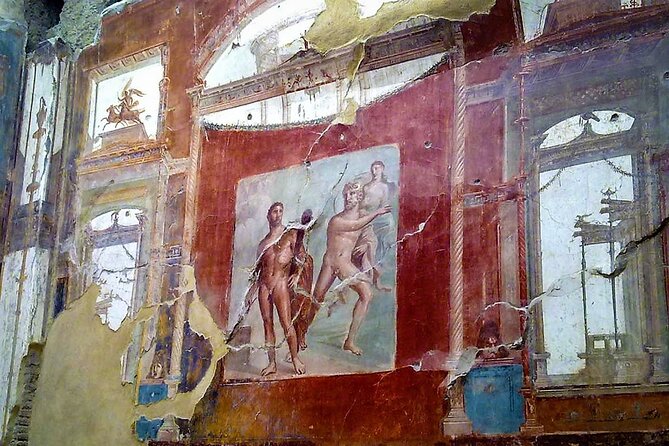
One of the most striking stops is the Sacello degli Augustali, near the forum when Augustus was still alive and in power. This matters because it places the site in the Roman political-religious world, not only private home life.
The building has a quadrangular plan and preserves frescoes that depict Hercules entering Olympus with Jupiter, Juno, Minerva, and Hercules against Achelous. That kind of imagery is a clue: Roman worship here is not abstract. It is visual, public-facing, and tied to power structures.
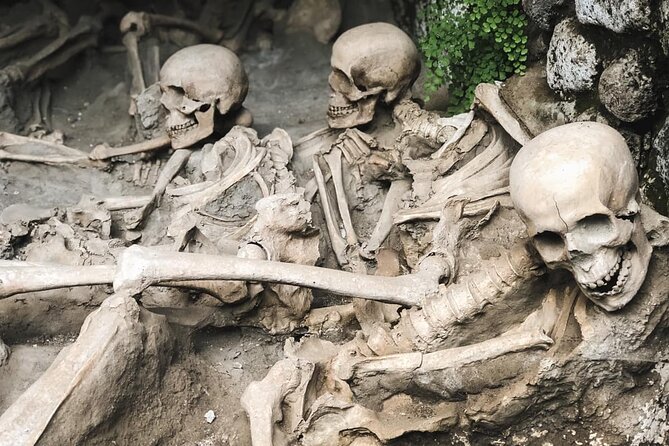
A darker detail is also part of the find. A janitor’s skeleton was found in his room, lying on the bed. It’s not there for shock value. It’s included because archaeology captures the human reality behind the art.
If you only remember one sacred stop, make it this one. The iconography ties directly to the Hercules storyline the tour keeps returning to.
Luxury and sea-facing life at Casa di Nettuno e Anfitrite
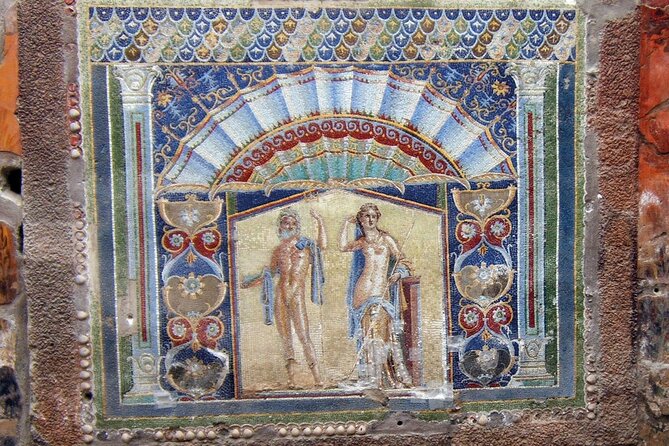
Next, you’re in the realm of wealth and domestic display at Casa di Nettuno e Anfitrite. The star here is mosaic work, described as made of vitreous materials, and the scenes include floral and hunting imagery.
In the center is the mosaic featuring Neptune and Amphitrite, marine divinities shown together. This is where it helps to think like a Roman household owner. A mosaic is not only decoration. It signals taste, status, and what the household wants to honor or project.
Deer statues and a freed person’s garden vibe at Casa dei Cervi
At Casa dei Cervi, the name comes from what you see in the garden: two statues of deer attacked by a pack of dogs. That detail gives the place personality. The deer imagery isn’t random. It’s a theme that fits the Roman love for hunting symbolism and dramatic sculpture.
This house belonged to Q. Granius Verus, described as a freed slave shortly before Herculaneum’s destruction. That background matters. It reminds you that Herculaneum’s social world was complex. Status could shift, and domestic luxury could be part of that story.
The largest house so far at the House of the Hotel
The House of the Hotel is flagged as the largest house of Herculaneum discovered so far, with about 2,250 square meters, plus a panoramic situation near the edge of the hill.
There’s also a detail that makes it stand out from the surrounding homes: it’s described as the only one of the city to have a spa district. The tour connects the size and the spa area to why the building was first thought of as a hotel.
Even if you don’t know Roman architecture, you’ll feel the difference when you see the scale. Bigger spaces mean more rooms, more movement, and more opportunities for the household’s status to show up in how they used the property.
The Black Salon and the waxed tablets story at Casa del Salone Nero
Then comes a memorable room name: the Casa del Salone Nero. This is the house of the black salon, where the party hall is entirely painted in black with geometric patterns.
You also get a documentary-style find here: waxed tablets of L. Venidius Ennychus were found. The tablets speak about eligibility for an Augustale role, the purchase of a slave, and the birth of a daughter.
That blend of art and paperwork is rare. It helps you see the difference between surfaces you can admire and records that explain real legal and social life.
If you’re the type who likes facts you can carry home, this is the stop to anchor your memory.
The skeleton house and what it reveals at Casa dello Scheletro
At Casa dello Scheletro, the name comes from a discovery made in 1831: human remains found in a second-floor room. The description also suggests the building likely formed by combining three smaller structures.
This stop is a reminder that the archaeological record can be incomplete. Sometimes the most “named” feature is the most surprising discovery, and you have to trust the site evidence rather than perfect architectural symmetry.
It’s also a good moment to slow down, because the guides usually use this stop to explain how archaeology changes as new finds emerge.
Mosaics and myth translated into home walls at the Casa of Neptune and Amphitrite
After all the house stops, the Neptune and Amphitrite mosaic lands like a finale in color and meaning. Between the deer imagery, black painted hall, and sacred frescoes, you can start to see the bigger pattern: Romans surrounded themselves with images tied to identity, belief, and status.
Where all those houses fit: a city of many kinds of rooms
If you think of Herculaneum as one big museum, it can blur together. But the tour structure helps you see contrasts:
- sacred space near the forum with Hercules-themed frescoes
- domestic luxury houses with sea views and mosaics
- entertainment and symbolic art, like the black painted salon
- evidence of social standing through finds like tablets and sculpture themes
That contrast is why the route feels coherent instead of repetitive.
Lunch and wine: local products without derailing the day
The tour includes wine tasting and a light lunch with local products. This is where value shows up for real.
In a day trip like this, the “extra” items can either feel like a gimmick or like sensible fueling. Here it’s clearly meant to keep you from running on espresso and stubbornness all afternoon. You get to eat after the wine tasting window, and then you’re ready to handle the archaeology portion without feeling wrecked.
If you’re traveling with people who might get hangry, lunch inclusion is a practical peacekeeper. It also keeps the schedule tighter, since it’s built into the day rather than something you scramble for after a long park visit.
Price and value: what you’re really paying for
At $145.39 per person, this isn’t a bargain-basement outing. But it also isn’t just a guided walk with nothing else.
You’re getting:
- a guided archaeological experience in Herculaneum with authorized expertise
- entrance included for the site area
- reserved entrance for Ercolano
- semi-private air-conditioned transport from Sorrento
- wine tasting tied to Vesuvius production
- a light lunch with local products
That combo is exactly what you’d struggle to rebuild on your own without spending time booking multiple tickets and coordinating transport. The group size cap and reserved access also reduce the downtime that can quietly cost a day.
Is it perfect value for everyone? No. If you want to go completely solo, spend hours wandering at your own pace, or you strongly prefer museums over walking, this may feel structured. But if you want an organized, interpretation-led day with food and wine included, it’s a solid match.
Who this Herculaneum day is best for
This tour suits you if:
- you want clear explanations while you see major parts of Herculaneum
- you like a mix of archaeology and local tasting
- you prefer a scheduled day rather than planning each ticket and transfer
It’s also good for couples and small families that need structure. The maximum group size of 30 helps keep it manageable.
If you dislike guided routes, or you prefer to linger long in one room, you might prefer a self-guided visit. This tour is designed for efficient learning across multiple sites.
Should you book this guided Herculaneum day?
I’d book it if you want a day that feels organized and meaningful, not random. The best reason is the pairing of expert archaeological guidance with a walk through preserved rooms that explain Roman daily life. Add the reserved site access, transport support, and the included wine tasting and light lunch, and you get a day trip that saves you from logistical friction.
Pass on it only if you cannot handle several hours of walking and outdoor time, or if you want a totally unstructured itinerary.
FAQ
How long is the guided Herculaneum tour?
The duration is approximately 7 hours, and the exact timing can vary due to local traffic conditions or other circumstances.
What’s included in the price?
The tour includes a guided visit of Herculaneum, entrance tickets reserved for Ercolano, wine tasting, and a light lunch with local products, plus transportation by semi-private coach with air conditioning.
Is entrance to Herculaneum included?
Yes, entrance is included for the Parco Acheologico di Ercolano stop.
How large is the group?
The tour has a maximum of 30 travelers.
Where does the tour start?
The start meeting point is Bar Kontatto, Corso Italia 257, 80067 Sorrento NA, Italy.
Will I receive a ticket in advance?
You’ll use a mobile ticket, and confirmation is received at the time of booking.
What languages are available for the guide?
The tour can be operated by a multilingual guide.
What happens if the weather is bad?
This experience only takes place in favorable climatic conditions. If it’s canceled due to bad weather, you can choose another date or receive a full refund.
Is free cancellation available?
Yes, free cancellation is available. You can cancel up to 24 hours in advance for a full refund.
New on the Sorrento coast





Herculaneum Tours from Sorrento, compared.
Guided Day Tour of Pompeii and Herculaneum with Light Lunch
Read our review →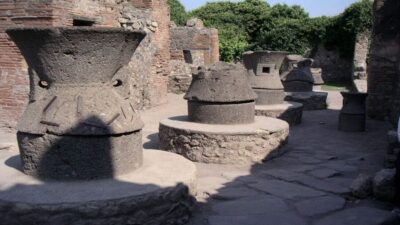
Pompeii & Herculaneum Tour with Skip-the-Line
Read our review →
Pompeii, Herculaneum and Winery on Vesuvius with an Archaeologist
Read our review →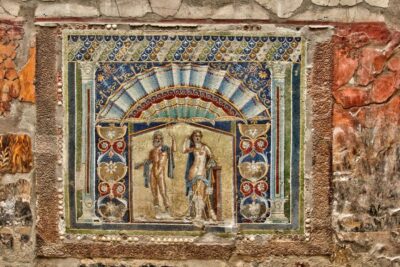
Herculaneum: 2-Hour Skip-the-Line Tour from Sorrento
Read our review →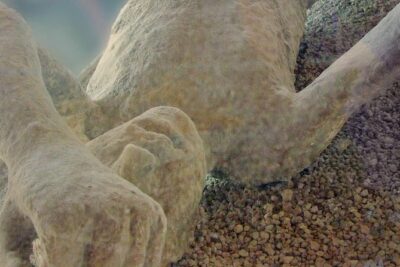
Pompeii & Herculaneum – Skip the line from Sorrento
Read our review →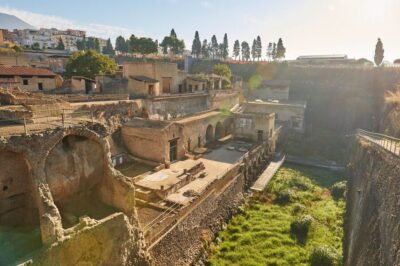
Pompeii and Herculaneum small group excursion from Sorrento
Read our review →
Private Pompeii and Herculaneum Day Tour with Pick Up
Read our review →Browse the lists this tour appears in