
Reviewed · POMPEII DAY TRIPS FROM SORRENTO
Pompeii, Herculaneum and Winery on Vesuvius with an Archaeologist
Pompeii and Herculaneum feel close here. This private outing pairs an on-the-ground archaeologist with a Vesuvius National Park winery lunch, so the ruins connect to real food, real wine, and real local life. I also love how the schedule is built for a flexible pace, with time to slow down where your group wants details and quick moves when crowds start to swell.
The big idea is simple: you get guided walking tours through the top Pompeii and Herculaneum highlights, plus a guided vineyard visit and lunch at Cantina del Vesuvio (Cantina del Vesuvio Winery Russo family since 1930). One possible drawback is that the main ticket costs are not bundled into the tour price, and the winery lunch is an extra set package you pay separately per person.
In This Review
- Key points at a glance
- Pompeii and Herculaneum together, without the usual chaos
- Meet Fabrizio Bellini, and why his style matters
- Enter Pompeii through Porta Marina, then head straight to the heart
- Walking the Forum, then stepping into everyday Roman life
- Casa dei Vettii and the restored fresco shock
- Insula dei Casti Amanti: watching archaeology in action
- Teatro Grande, Roman social life, and the whisper test
- Antiquarium di Pompei: the museum moment that changes your walk
- Lunch and wine at Cantina del Vesuvio, with views and no volcano climb
- Herculaneum starts with the right angle: Antiquarium to ruins
- Boat Pavilion and ancient shoreline, where the eruption feels real
- Houses with art and design, Casa dei Cervi and Casa di Nettuno e Anfitrite
- Women’s Baths and the Palestra: Roman daily life beyond the obvious
- Where the wine ad fits: a quick, fun closing detail
- Price and what to budget, so there are no surprises
- Who should book this tour, and who might want to rethink it
- Should you book this private Pompeii and Herculaneum archaeologist tour?
- FAQ
- Is pickup included, and where can it happen?
- How long is the tour?
- Is this a private tour or shared group?
- Do I need to buy tickets for Pompeii and Herculaneum?
- Is the winery lunch included in the price?
- Does the tour include going to the top of Mount Vesuvius?
- What is included in the tour besides the guides?
- What language is the guide?
- Is the winery part just tasting, or do you eat too?
- Is the itinerary family-friendly?
Key points at a glance
- Private archaeologist guide (Fabrizio Bellini) who has decades of experience and keeps the story clear and practical
- Flexible routing to fit your pace, and help avoid crowds when possible
- Vesuvius winery lunch package with a vineyard walk and tastings, without hiking up the mountain
- Pompeii highlights with standout fresco and excavation stops, plus museum context at the Antiquarium
- Herculaneum focus on preservation, from the Antiquarium’s organic finds to the Boat Pavilion and ancient shoreline
- Family-friendly approach, including energy checks and kid engagement during the day
Pompeii and Herculaneum together, without the usual chaos
Trying to do Pompeii and Herculaneum on your own usually turns into a juggling act. You need tickets, routes, navigation help, and then you still have to figure out what you’re looking at. This tour handles the hard parts for you: private transport, a guide who knows the sites deeply, and a day plan that links the big moments in each place.
What makes this combination work is the emotional contrast. Pompeii gives you the scale of a busy Roman city, with theaters, forums, baths, shops, and neighborhood homes. Herculaneum is the flip side, smaller and incredibly well preserved, where you can see how daily life looked in a seaside setting when the eruption sealed it in volcanic mud.
Meet Fabrizio Bellini, and why his style matters
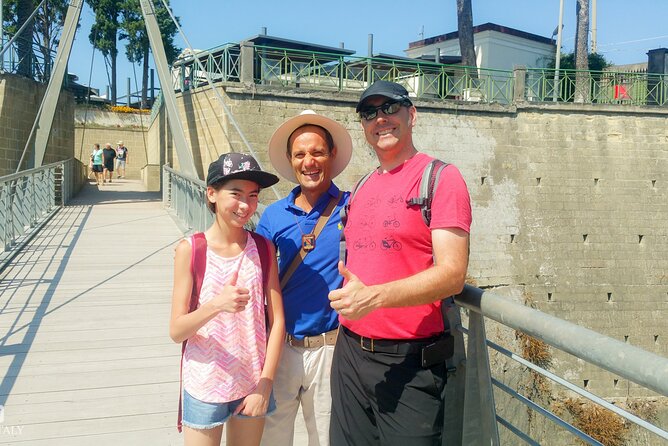
This is a private tour, and the guide is a big part of why it’s so highly rated. Fabrizio Bellini is an archaeologist who has guided Pompeii for decades, and his approach is hands-on rather than lecture-only. You won’t just get names of buildings, you’ll get why they existed, how people used them, and what details to watch for as you walk.
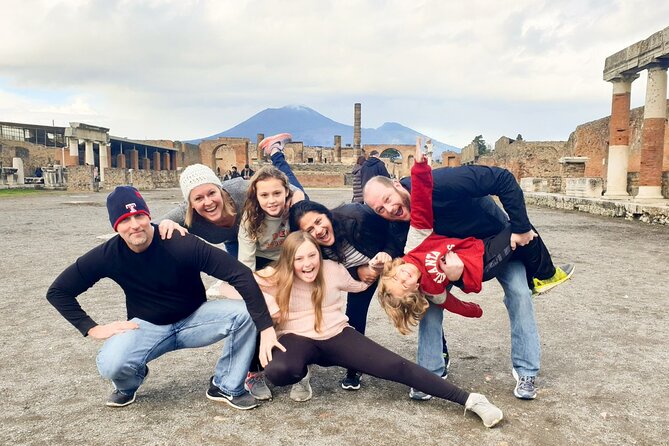
A practical plus is pacing. The itinerary is designed so you can move at your own speed inside the sites, and the guide can adapt if someone needs shade, slower steps, or breaks. If you’re traveling with kids, he also has a track record of keeping them engaged, asking them questions during the walk, and answering the kind of rapid-fire questions that only children can invent.
Smaller than Pompeii, just as frozen in time
- Guided Day Tour of Pompeii and Herculaneum with Light Lunch
★ 4.5 · 311 reviews - Sorrento: Pompeii & Herculaneum Tour with Skip-the-Line
★ 4.6 · 125 reviews - Herculaneum: 2-Hour Skip-the-Line Tour from Sorrento
★ 4.0 · 46 reviews - Pompeii & Herculaneum – Skip the line from Sorrento
★ 4.5 · 44 reviews
Enter Pompeii through Porta Marina, then head straight to the heart
Your day in Pompeii starts at the Porta Marina area, which is a smart way to get your bearings fast. You go through the modern park entrance and into the city’s old gateway built into the walls, then you rise up toward the Forum. It’s an easy starting rhythm because you’re transitioning from today into the ancient street layout in a way that helps your brain map what comes next.
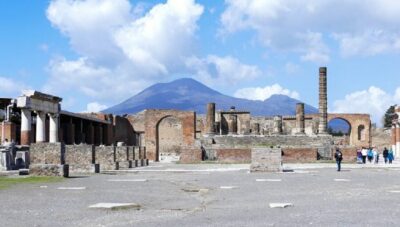
From there, you visit the Temple of Apollo, one of the Forum’s defining sights. It’s an open-air museum feeling, with surviving architectural elements and replicas that help you understand the sacred space. You also get a strong view direction-wise, with Mount Vesuvius looming in the background, which helps connect the city’s story to the volcano itself.
Walking the Forum, then stepping into everyday Roman life
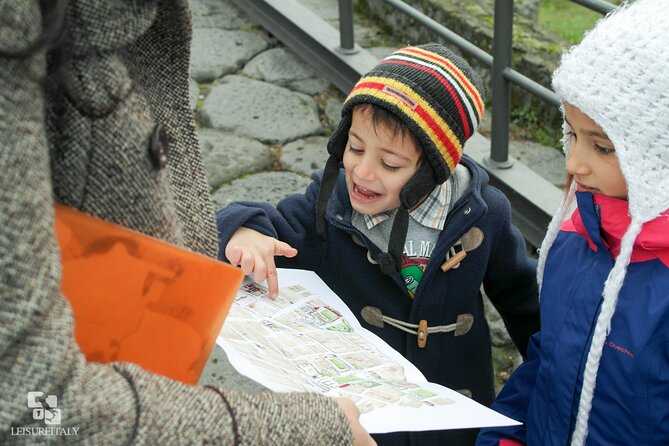
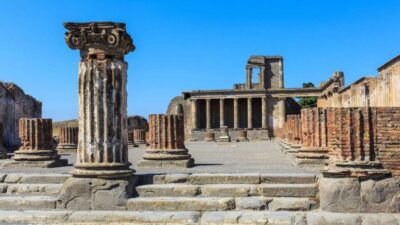
The Forum of Pompeii is where Roman civic power is on full display. With a guide, it’s not just big stones. You walk across the original paving and see major structures like the Temple of Jupiter and the Basilica, plus the market zone where commerce played out.
The most helpful part here is learning how to read the “everyday” details. The Macellum market and the mensa ponderaria (official weighing table) give you a tangible sense of daily trade, not just government rituals. If you’ve ever visited ruins and felt like they’re all equal size with no clue what mattered most, this is where a guide earns their day.
Casa dei Vettii and the restored fresco shock
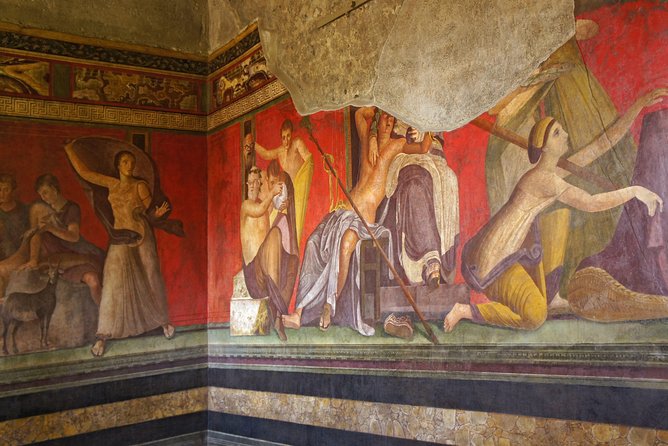
Pompeii has plenty of pretty walls, but the best places make you stop short and stare. Casa dei Vettii is one of those stops. It’s famous for Fourth Style frescoes and the restored look that makes the rooms feel like a private gallery instead of a ruin.
You’ll also see the protective imagery near the entrance, and you can picture how a wealthy household used art for status, comfort, and identity. The peristyle garden is a key finishing moment too, because gardens in Pompeii aren’t just “nice to have.” They were part of how elite families shaped daily life and social display.
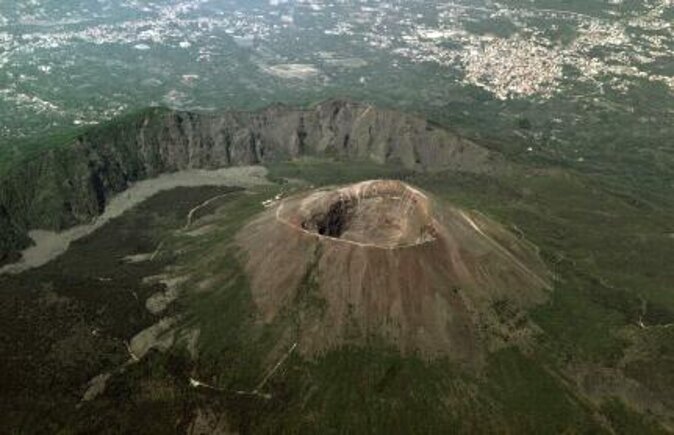
The volcano that buried Pompeii is still active
Insula dei Casti Amanti: watching archaeology in action
One of the most memorable Pompeii additions is Insula dei Casti Amanti on Via dell’Abbondanza. This site uses elevated walkways so you can look down into an entire block, including major homes and even areas connected to baking and food. It’s one thing to walk through ruins. It’s another to see the excavation layers and structure from above.
The story stays human here. The couple’s kiss fresco gives the block its name, and you can spot charcoal sketches tied to children who lived there about 2,000 years ago. That kind of detail helps the past feel less like a museum exhibit and more like a community.
Teatro Grande, Roman social life, and the whisper test
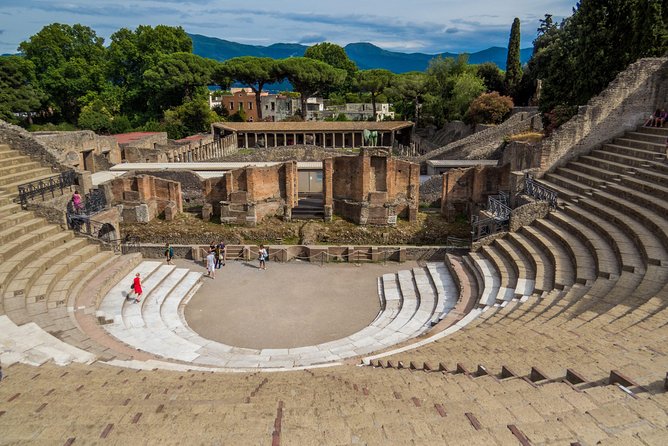
The Teatro Grande is a standout because it’s not a dead object. It was built in the 2nd century BC and shows Roman social design in stone. The seating layout reflects status, with elite marble seats placed closer to the performance, and others behind.
And yes, there’s a famous acoustic story: the theater is known for carrying sound so well that a whisper from the stage area can reach far up the tiers, about 5,000 seats away. Even if you don’t perform the trick yourself, your guide can explain why the building design matters.
Antiquarium di Pompei: the museum moment that changes your walk
After Pompeii’s open ruins, the Antiquarium di Pompei gives you essential context. It’s at the Porta Marina entrance area, so it feels like a bridge between “what’s left” and “what it meant.”
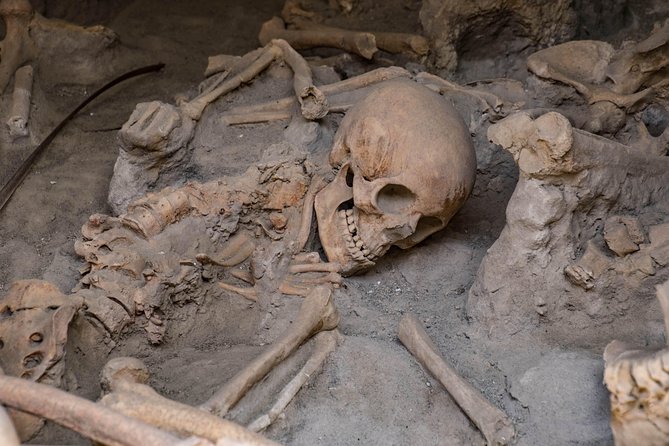
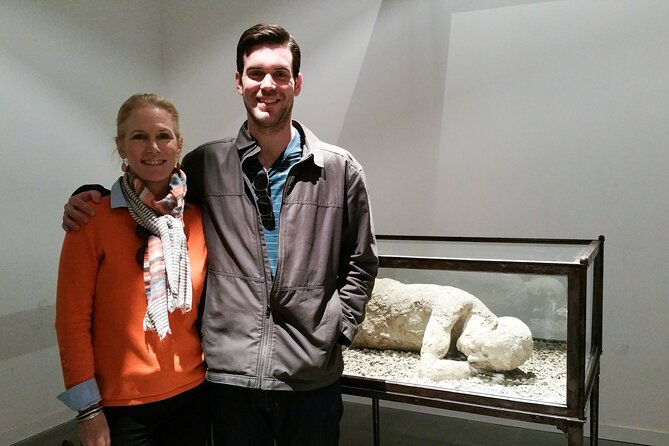
The key emotional element is the museum’s plaster casts, which show the final moments of victims and even a faithful guard dog. That shift matters. Without it, Pompeii can feel like a spectacle of art and architecture. With it, you remember that this was a real human tragedy, not just a photo stop.
Lunch and wine at Cantina del Vesuvio, with views and no volcano climb
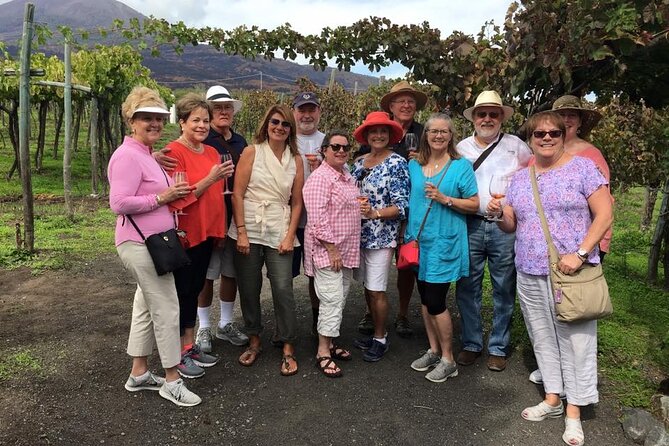
This is where the day becomes more than sightseeing. Cantina del Vesuvio is inside Mount Vesuvius National Park, and you eat with views of the Bay and Vesuvius crater area. There’s a guided vineyard walk of about 15 minutes first, focused on the local grape story, including the famed Lacryma Christi wines.
Then you sit down for lunch with a set menu paired with five local wines. The menu is substantial and very regional, including appetizers like bruschetta with tomatoes, provolone cheese, olives, salame, capocollo, plus grilled vegetables and beans. The main course is spaghetti with Vesuvian cherry tomatoes, followed by pastiera, the classic Neapolitan Easter dessert made with wheat, ricotta, eggs, and sugar. Vegetarian and gluten-free options are mentioned, so you can ask ahead with your group’s needs.
This winery stop is also practical. It’s a good reset during a long day, especially in heat, and it keeps you from having to hunt for lunch after a morning of walking.
Herculaneum starts with the right angle: Antiquarium to ruins
Herculaneum works best when you understand what makes it different. The guide’s route aims to hit top highlights without making you repeat yourself, and it tends to feel more “site-specific” than Pompeii’s huge grid.
A smart early stop is the Antiquarium di Ercolano, which helps you understand why this place preserves so much. You’ll see fragile treasures in a modern setting, including organic materials that are rare elsewhere, like carbonized wooden furniture and textiles. The museum also includes the famous Herculaneum Treasure, described as a shimmering collection found with victims at the ancient shoreline.
This museum stop changes how you read the ruins. With the context in your head, you notice more. You understand why certain objects survived and what that means for daily life.
Boat Pavilion and ancient shoreline, where the eruption feels real
The Boat Pavilion is one of those stops that lands hard. You see a carbonized keel from a long boat, about 9 meters, found where it was upturned by pyroclastic flows. Alongside it are smaller maritime items like fishing weights, nets, and a carbonized rope. This is the “sea life” angle, and it helps you understand why a seaside town would try to escape by water.
Then comes the Ancient Beach area, which reopened in 2024 after restoration. You walk along the shoreline where volcanic sand still sits under the story of the eruption. It’s described as standing several meters below modern ground level, which makes the landscape change feel physical, not theoretical. If you want the strongest emotional moment in Herculaneum, this is it, because it places you at the scene of the final desperate escape by sea.
Houses with art and design, Casa dei Cervi and Casa di Nettuno e Anfitrite
Herculaneum’s residential stops are where you see Roman luxury at close range. Casa dei Cervi is named for two famous marble stags attacking by hounds found in its garden. The design also matters: the house includes an inverted layout with a panoramic terrace and a garden planned for sea breezes and views across the Gulf of Naples.
Right next door in spirit is Casa di Nettuno e Anfitrite. It’s famous for a striking mosaic of gods in shimmering gold and blue glass paste. You can also see an outdoor summer triclinium decorated with shells and lava stone.
A special bonus here is the attached shop, widely treated as one of the best-preserved grocery spaces from antiquity. You can see original wooden shelving and carbonized storage bins, tied to storage of things like legumes and grain. It turns a “house” into a living economic system.
Women’s Baths and the Palestra: Roman daily life beyond the obvious
In Pompeii, baths are major. In Herculaneum, the baths feel even more complete. Termas Femeninas is described as exceptionally well preserved, with a black-and-white floor mosaic showing Triton surrounded by dolphins. You also see details like original wooden shelves that once stored women’s clothing, plus intact vaulted ceilings with stucco decoration.
The path moves through warm to hot rooms, including the tepidarium with a labyrinth-patterned mosaic, and the caldarium with hollow-wall heating. It’s a reminder that Roman life was organized, built for routine, and shared with privacy in mind even within public spaces.
Then you finish with Palestra, the gymnasium complex. The focus is civic pride and physical culture. You see the big cross-shaped natatio swimming pool and a hydra-shaped fountain, plus the courtyard layout that helps you picture athletes and youth practicing in the Mediterranean sun. A carbonized wooden statue of a local benefactor is mentioned too, adding a human anchor to a large empty space.
Where the wine ad fits: a quick, fun closing detail
At some point during the Herculaneum walk, you can also catch Ad Cucumas, described as an ancient wine advertisement from a wine-seller. It’s a small stop, but it helps you remember that even in tragedy, everyday commerce, humor, and marketing existed.
Price and what to budget, so there are no surprises
The tour price is listed at $861.07 per group, for up to 7 people. That’s the base cost for the private transport and guided time in both sites, plus water and Wi-Fi on board and an air-conditioned vehicle.
Two add-ons matter for your budget:
- Pompeii and Herculaneum admission is not included. The guide rate gives an estimate of about €40 per adult for both sites, and under 18 visitors can enter for free with valid ID.
- The winery lunch package is not included in the tour price. The set cost is €50 per person all-inclusive, with €60 for a superior wine upgrade. Payment is handled on site, and the guide arranges the reservation.
So the value depends on your group size and who wants the winery wine upgrade. With 7 people, the base cost works out to roughly the equivalent of a little over a hundred dollars per person before admissions and lunch. If you’re traveling with fewer people, your per-person base rate increases, but you’re still buying something important: a guide’s time plus private logistics that save you from planning friction.
Who should book this tour, and who might want to rethink it
This is a strong fit if you want:
- A true guided day at major ruins, not a self-guided stroll with vague explanations
- Flexibility, especially for families and mixed ages
- The pairing of big Pompeii highlights with Herculaneum’s preservation and museum context
- A lunch stop that’s actually part of the experience, not just where you ended up eating
It might be less ideal if:
- Your group wants to spend unlimited time in just one site, because the day is structured to cover both
- You dislike a long, active day, since the tour requires moderate physical fitness and involves uneven stones
Should you book this private Pompeii and Herculaneum archaeologist tour?
If your goal is to understand what you’re seeing, and you want the day to run smoothly from pickup to museum to winery, I think this is worth serious consideration. The strongest selling point is the guide, Fabrizio Bellini, with a track record of adapting to families, keeping explanations clear, and managing the pace so the day stays enjoyable instead of exhausting.
Book it if you’re ready for a full-day rhythm, you’re comfortable with extra ticket and lunch costs, and you want Pompeii and Herculaneum to feel like stories instead of scenery.
FAQ
Is pickup included, and where can it happen?
Pickup is available. The guide can pick you up anywhere in the Naples or Sorrento area. If you are staying on the Amalfi Coast, you should contact the provider.
How long is the tour?
It runs about 8 to 9 hours.
Is this a private tour or shared group?
It is private. Only your group will participate.
Do I need to buy tickets for Pompeii and Herculaneum?
Admission fees are not included. The estimate provided is about €40 per adult for both sites, and under 18 can enter for free with valid ID.
Is the winery lunch included in the price?
No. The winery visit, lunch, and wine tasting are offered as an all-inclusive package costing about €50 per person, or about €60 with a superior wine upgrade. Payment is made on site.
Does the tour include going to the top of Mount Vesuvius?
No. The tour does not reach the top of Mount Vesuvius.
What is included in the tour besides the guides?
The tour includes air-conditioned vehicle, water and Wi-Fi on board, private guided tours in Pompeii and Herculaneum, and private transportation.
What language is the guide?
The tour is offered in English.
Is the winery part just tasting, or do you eat too?
You eat too. The package includes a guided vineyard stroll, a set menu lunch paired with five local wines, and a traditional dessert.
Is the itinerary family-friendly?
There is an upgrade designed to be family-friendly. The provider notes the tour requires moderate physical fitness, but the day is tailored to the group’s needs and pace.
A Day among the Ruins
- Sorrento: Skip-the-Line Pompeii Express Tour by Train
★ 4.8 · 2,038 reviews - Pompeii Express Guided Tour by Train from Sorrento
★ 4.5 · 770 reviews - Skip-the-Line Pompeii Guided Tour from Sorrento
★ 4.5 · 722 reviews - Pompeii Ruins Half-Day Tour from Sorrento with Guide
★ 4.0 · 714 reviews
Wine Tastings above the Bay
- Sorrento Farm and Food Experience including Olive Oil, Limoncello, Wine tasting
★ 5.0 · 2,524 reviews - Sorrento: Pizza Lesson, Wine, and Limoncello at a Local Farm
★ 5.0 · 1,513 reviews - Amalfi Coast Day Tour from Sorrento with Light Lunch and Wine
★ 4.5 · 1,148 reviews - Pizza School with Wine and Limoncello Tasting in a Local Farm
★ 5.0 · 845 reviews
New on the Sorrento coast





Pompeii Day Trips from Sorrento, compared.
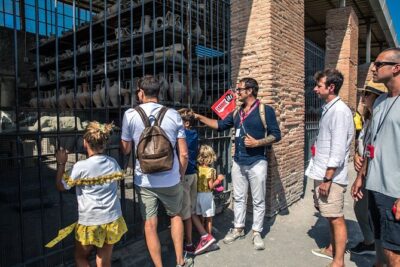
Priority Access Pompeii & Mt. Vesuvius Full day from Sorrento
Read our review →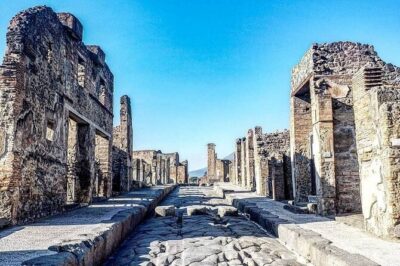
Pompeii Express Guided Tour by Train from Sorrento
Read our review →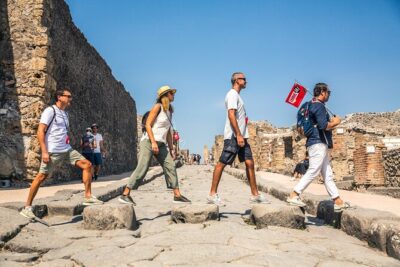
Skip-the-Line Pompeii Guided Tour from Sorrento
Read our review →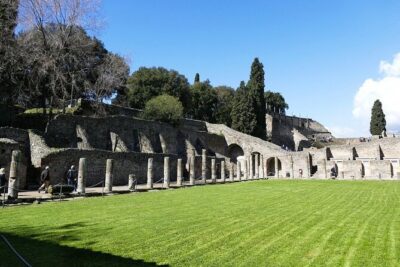
Pompeii Ruins Half-Day Tour from Sorrento with Guide
Read our review →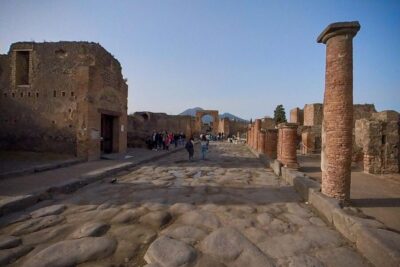
Pompeii and Vesuvius Guided Tour with Lunch
Read our review →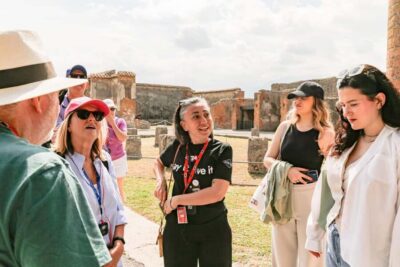
Day Tour to Pompeii Ruins and Mount Vesuvius
Read our review →Browse the lists this tour appears in