
Reviewed · AMALFI COAST TOURS FROM SORRENTO
Pompeii & Amalfi Coast Private Tour: Archaeologist-led, Flexible
Pompeii plus the Amalfi Coast, in one clean day. This private tour pairs an archaeologist-led Pompeii walk with a flexible afternoon on the coast, guided in English and paced around what you want to see. I really like that the Pompeii guide work is detailed and practical, not just a recitation of dates, and that the Amalfi portion adapts so the day does not feel like a rushed checklist.
In Pompeii, you get an official guide style walkthrough of the key ruins, plus the behind-the-scenes texture of daily life, from public spaces like the Forum to elite homes like the House of the Vettii. On the coast, the schedule is built around the views and the actual time you spend in towns like Sorrento, Positano, Amalfi, and Ravello. One thing to weigh: Pompeii involves a lot of walking, and it is not recommended if you have walking issues.
In This Review
- Key things that make this tour work so well
- Pompeii and Amalfi Coast, without the usual stress
- Fabrizio and the archaeologist-style Pompeii walkthrough
- Entering Pompeii the cinematic way: Porta Marina
- Forum and Basilica: the city’s public heartbeat
- Market and meals: the Macellum and Thermopolium
- Private wealth and daily rituals: House of the Vettii and Forum Baths
- Theater time: Teatro Grande
- The museum that ties it together: Antiquarium di Pompei
- The coastal drive between scenes: SS145 Sorrentina
- Sorrento for the classic reset and base
- Amalfi Drive on SS163: the road that makes people talk
- Positano and Amalfi: two towns with different vibes
- Ravello and Villa Cimbrone: calm views above the crowds
- Optional slower coast stops: Minori, Maiori, and Erchie
- Vietri sul Mare for ceramics and a final sea view
- Price and value: what you pay for, and what to budget for
- What to expect on the day itself
- Tips that will help you get a better day
- Should you book this Pompeii and Amalfi private tour?
- FAQ
- Is Pompeii admission included in the tour price?
- What is the tour duration?
- Does the tour include transportation and pickup?
- Can the guide meet us in Amalfi or Ravello?
- Is the tour private?
- Is lunch included?
- What language is the tour offered in?
- Is WiFi and bottled water included?
- Is this tour suitable if I have walking issues?
- Are tickets required for sites in Pompeii?
- What is the cancellation policy?
Key things that make this tour work so well
- Fabrizio Belleni’s archaeologist approach to Pompeii ruins, with context for how people lived in 79 AD
- Flexible Amalfi Coast planning, with stops adjusted to your group and priorities
- Hotel or port pickup options around Naples, Sorrento, Positano, and Pompeii, plus WiFi and bottled water on board
- High-impact Pompeii stops like the Basilica, Forum, baths circuit, and theater areas, with time for the museum
- Lunch support based on your needs, including gluten-free help when required (shared in past experiences)
Pompeii and Amalfi Coast, without the usual stress
This is the kind of day trip that makes sense when you want two famous places and you still want the day to feel human. You are not stuck waiting for a slow-moving group, and you are not forced into a rigid order when the heat, crowds, or your interests shift.
The tour is private, and that matters in two ways. First, in Pompeii, a smart guide can steer you toward what will click for you, instead of dragging you through everything. Second, on the coast, you can adapt to traffic and pick the towns and viewpoints that fit your energy level.
Fabrizio and the archaeologist-style Pompeii walkthrough
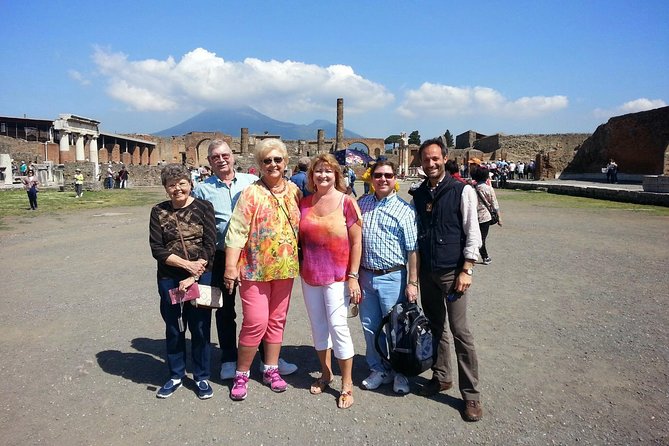
The headline here is Fabrizio Belleni, a private guide who approaches Pompeii like a place you can understand, not just a place you can photograph. In past days with this guide, people highlighted how he explains the ruins so they feel real, and how he can keep families and kids engaged without making it feel childish.
You will also feel the practical side of how he works. Many guides will tell you where to stand. Fabrizio helps you see, by connecting architecture and street layouts to daily routines: where people traded, where officials judged cases, where bathgoers moved through cold and hot rooms, and how elite households were organized around gardens.
If you are visiting Pompeii for the first time, this style gives you quick “big picture” footing. If you have been before, it still helps because the focus is often on what you might miss on a self-guided pass: how Pompeians moved through the city, what the public buildings were used for, and why certain details matter.
Walk streets frozen since 79 AD
- Sorrento: Skip-the-Line Pompeii Express Tour by Train
★ 4.8 · 2,038 reviews - Priority Access Pompeii & Mt. Vesuvius Full day from Sorrento
★ 4.5 · 1,376 reviews - Pompeii Express Guided Tour by Train from Sorrento
★ 4.5 · 770 reviews - Skip-the-Line Pompeii Guided Tour from Sorrento
★ 4.5 · 722 reviews
Entering Pompeii the cinematic way: Porta Marina
The tour starts Pompeii with the Porta Marina entrance. Instead of a bland ticket gate experience, you walk up a steep ramp through a massive dual-arched gateway. The design is impressive, and it does something useful for your brain: it gives you a dramatic transition from the modern world into the ancient street grid.
This entrance also acts like a quick launch pad for the rest of the morning. It points you toward major nearby sights, including access to areas connected with the Antiquarium and the Baths zone mentioned in the plan. In practice, this means less time “figuring out where you should go next,” and more time doing the fun part, which is looking at stones and making sense of them.
Forum and Basilica: the city’s public heartbeat
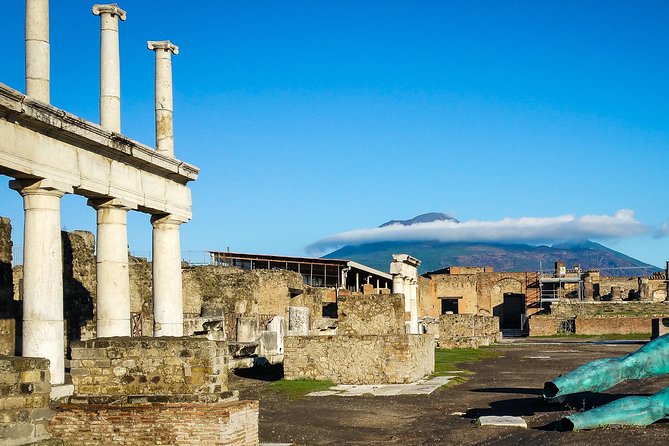
From Porta Marina, the route takes you through Pompeii’s most “civic life” parts. The Forum is described as the Times Square of ancient Pompeii, and the key takeaway is scale and layout. You walk across original paving, then you take in the monuments that framed political, religious, and commercial life.
The Basilica is the other anchor. This building is not presented as a church in the modern sense. Instead, it functioned as the courthouse and commercial exchange space, with magistrates handling trials from a raised podium. You can still see the footprint of the huge column system, including the idea of those 28 giant columns that once supported a roof.
Why this matters for you: once you understand that Pompeii’s “center” was not only about spectacle, you start noticing how Roman public design encouraged crowds, trade, and authority in one place. That makes later stops, like markets and bath areas, feel more connected rather than random.
Market and meals: the Macellum and Thermopolium
Two of the most memorable stops on this plan are about food, because food is a fast way to make the past feel close.
First is the Macellum, the official covered food market by the Forum. The layout is still readable, from surrounding shops to the central pavilion area where fish cleaning and sales likely happened. The plan also notes the presence of details like frescoes and the mensa ponderaria, the stone table officials used to verify weights and measures for fair trade.
Then comes the Thermopolium, Pompeii’s “fast-food” counter. The description emphasizes how well preserved it is, including bright frescoes that likely acted like a menu. You get to look toward the deep terracotta storage jars where archaeologists found remains tied to diet, including items like duck, pork, fish, and snails. The point is not just that it existed. It is how clearly you can imagine someone grabbing a quick meal and continuing their day.
Practical tip: if you are the type who gets tired in museums, these two stops are a good energy break, because they are about everyday behavior.
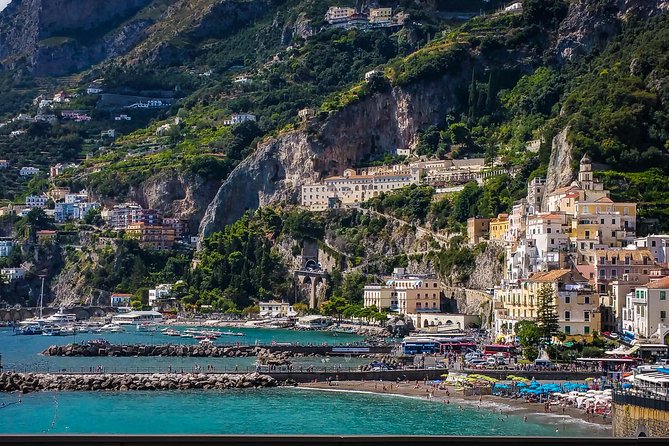
The coast road's famous switchbacks
Private wealth and daily rituals: House of the Vettii and Forum Baths
The tour keeps a nice balance between “public Pompeii” and “private Pompeii.”
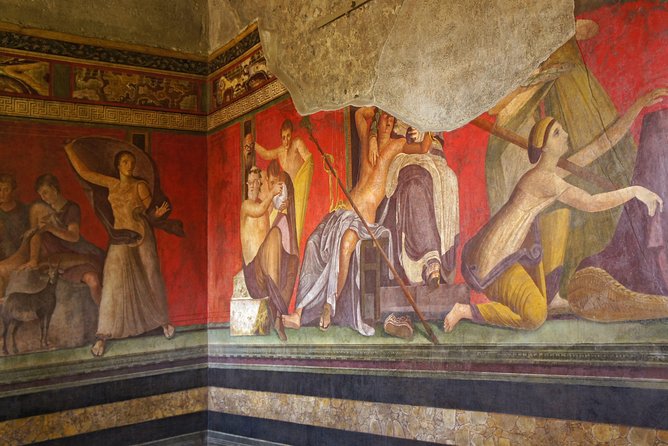
The Casa dei Vettii is treated as a top luxury highlight, often compared to the Sistine Chapel vibe for fresco detail. It is famous for vividly painted walls and for a peristyle garden that helps you understand how elite homes were organized around outdoor space. The restoration focus in the plan is part of what makes it compelling now, because you are not just looking at rubble, you are seeing carefully recovered color.
Then you switch gears to the Forum Baths. This is where the tour turns practical and bodily. You can follow the Roman bathing circuit: changing room, then cold, warm, and hot rooms. The description points to engineering details you can still recognize, like the hypocaust system for circulating heat.
Why I think this works for most people: the baths give you a human scale. People did this daily or regularly, and you can connect the movement through rooms to comfort, hygiene, and social life without needing advanced training.
Theater time: Teatro Grande
The Teatro Grande stop brings Roman social life into focus. You get to see how seating worked, including the idea of social hierarchy carved into the stone tiers. The tour plan also leans into something genuinely useful: acoustics. The theater is famous for carrying sound, so standing in the right place helps you “feel” how it functioned as a public experience.
This stop is also a good reset between other walking-heavy ruins, because it gives you a clear shape to understand quickly: horseshoe arena, tiered seating, and the sense of crowd energy.
The museum that ties it together: Antiquarium di Pompei

You also visit the Antiquarium di Pompei, described as an essential start point for understanding the site. This is a modern, air-conditioned museum where fragile treasures are housed, from items like silver hoards to fresco fragments.
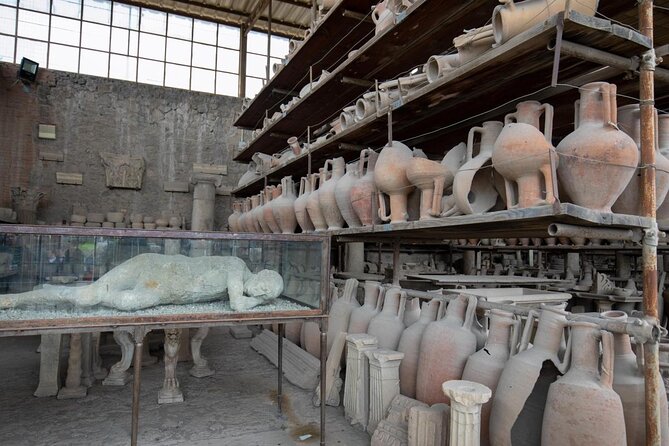
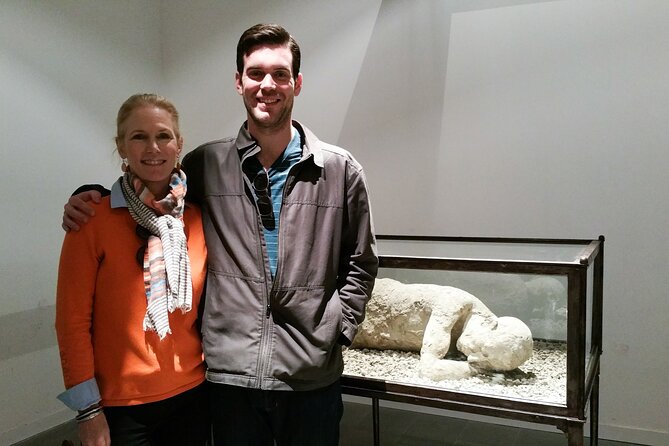
The most emotional connection here is the plaster casts of victims and animals. Even if you already know the story, the physicality helps it land. The tour plan also notes digital media and rotating displays, which helps keep the museum from feeling like a static storage room.
If you are worried about Pompeii being too outdoor and too hot, this museum time can be a sanity saver.
The coastal drive between scenes: SS145 Sorrentina
Once Pompeii ends, the day transitions into the kind of travel that feels like a postcard you can actually smell. The plan includes the SS145 “Sorrentina” coastal drive, a cliff-hugging route with sweeping curves above the Bay of Naples.
You get big perspective quickly: Vesuvius in the distance, turquoise water below, and towns like Vico Equense and Meta clinging to limestone bluffs. The route is also described as sensory, with lemon groves, tunnels, and watchtower views building anticipation. Even if you have seen photos, seeing it from the road helps because the coastline changes constantly with each bend.
Sorrento for the classic reset and base
In the schedule, you spend time in Sorrento with a half-hour window. The emphasis is on the centro storico atmosphere and the viewpoints over the bay and toward Vesuvius. You get enough time to wander a bit, grab a drink if you want, and take in the views without turning the town visit into a full time sink.
This is also a smart stop because Sorrento acts like a hub. From here, the Amalfi Coast looks dramatic and close, even though it takes time to travel the roads.
Amalfi Drive on SS163: the road that makes people talk
Next comes the legendary Amalfi Drive on SS163. The plan describes it as a bucket-list road, carved into the rock face with hair-raising curves and constant panoramas.
What you should expect is a lot of “look left, look right” moments: villages like Positano perched on slopes, terrace lemon groves, and sea views that change every few minutes. It is also a good time to put your camera away for ten seconds at a time. The driving takes focus, and the best memories often come from brief pauses where you simply take it in.
Positano and Amalfi: two towns with different vibes
The plan gives you short but meaningful stop times in Positano and Amalfi.
Positano is the vertical town, stacked with pastel buildings down toward the water. You are guided to the narrow alleys and areas near the Church of Santa Maria Assunta, including the tiled dome landmark. This is a good place for quick browsing and viewpoint stops, and it fits travelers who want that iconic Amalfi look in a single shot.
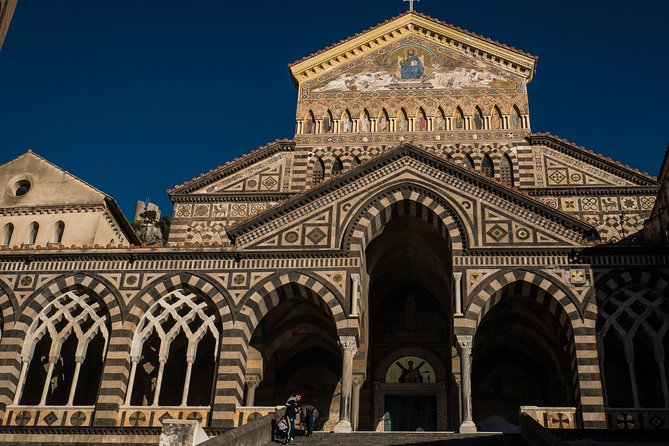
Then Amalfi is presented as the historic heart, with a main piazza and a deeper layer of maritime republic history. The plan specifically highlights the Duomo di Sant’Andrea, including its striped facade, a sweeping 62-step staircase, and a bronze door from Constantinople. The stop also points you toward the vicoletti side alleys and the Paper Museum as another “you can choose what you care about” option.
If you want one practical way to use your time well: pick one anchor sight in each town, then use the rest of your time to wander streets near it rather than chasing too many objectives.
Ravello and Villa Cimbrone: calm views above the crowds
Ravello is the tone-shift. Instead of being right in the crush of the coast road, it sits higher and feels quieter. The plan points to music and serenity, with highlights like Villa Rufolo and Villa Cimbrone.
In particular, Villa Cimbrone Gardens is the big feature. You walk through terraced gardens to the Terrace of Infinity, framed by classical busts and set dramatically above the sea. The viewpoint is described as among the most beautiful on the coast, and for good reason: it gives you a long view up and down the coastline rather than just a single postcard angle.
If you are traveling in hotter months, this part of the day can feel like a reward, because you are not constantly fighting crowds and tight streets.
Optional slower coast stops: Minori, Maiori, and Erchie
The itinerary also includes several towns that are not always the first picks for casual day trips: Minori, Maiori, and Erchie.
- Minori is framed as a calmer food-leaning town, tied to Sal De Riso pastries and artisanal pasta traditions, plus Roman-era references like Villa Romana Marittima mosaics and frescoes.
- Maiori is positioned as easier walking compared to the more vertical villages, with the longest sandy beach on the Amalfi Coast and a palm-lined promenade. It also includes local history stops and a suggestion of the Path of the Lemons hike.
- Erchie is described as secluded, with a small fishing-hamlet feel and a pebble beach with clear water. It is presented as a quieter swim option away from the biggest crowds.
Because the tour is flexible, this is where you can make your day feel personalized. If you want more local flavor and less famous-sight pressure, ask your guide to prioritize these type of stops.
Vietri sul Mare for ceramics and a final sea view
Near the end of the coast loop, the plan includes Vietri sul Mare, described as the gateway to the Amalfi Coast and Italy’s ceramics capital. This is the stop for color if you love crafts. You see the town’s signature majolica tiles everywhere, and the Church of San Giovanni Battista is the standout with its dome covered in shimmering tile work.
You also get the sense of a more everyday seaside town, since the plan mentions Marina di Vietri and a regular beach vibe. It is a nice place to pick up a hand-painted souvenir without feeling like you are shopping in a “tourist theme park.”
Price and value: what you pay for, and what to budget for
At $540.66 per person for an 8 to 9 hour private day, you are not paying for a bus tour. You are paying for transportation, pickup, and one guide dedicated to your group.
Two cost details matter:
- Admission for Pompeii is only included if you select the ticket-included option at booking. Otherwise, the Pompeii admission fee is listed as €19. Free for kids.
- Lunch is not included. The plan notes you will have choices based on your requests.
In value terms, you get your money’s worth when you care about two things: not wasting time figuring out logistics, and getting a guide who can explain Pompeii in a way that makes you want to keep walking. The reviews attached to this tour strongly emphasize that exact point, especially the way Fabrizio tailors the day and helps people squeeze more meaning into the limited hours.
What to expect on the day itself
This tour includes private transportation pickup and drop-off, plus bottled water and WiFi on board. It is also offered in English, and the day is designed for moderate physical fitness. Pompeii is not recommended if you have walking issues.
Pickup is flexible: Fabrizio can meet you in Naples or Sorrento or Positano or Pompeii. The plan also says it is not a problem if you start at the port, airport, or railways in Naples. If you want pickup from Amalfi or Ravello, that is possible for an additional charge.
One more practical note from the described experience style: this is a private group, so you are not sharing the day with strangers. That usually means fewer time conflicts and more room for bathroom stops and pace changes.
Tips that will help you get a better day
A few things can make the difference between a good day and a great one.
First, tell Fabrizio your priorities early. This tour is built to be tailored, so you should say what matters most to you in Pompeii: markets and everyday life, elite homes, public buildings like the Basilica, or the baths and theater.
Second, if heat is a concern, you can ask about timing. In one described experience, the guide advised waiting until the afternoon for Pompeii because the breeze usually picks up. That worked well, and it is the kind of local pacing that a good guide brings.
Third, if you have dietary needs, mention them upfront. One past group shared that the guide found freshly made gluten-free pasta for lunch near the Pompeii entrance, which is not something you want to try to solve yourself at the last minute.
Finally, bring shoes you trust. Pompeii is uneven and you will walk. This tour can be paced, but the ruins are still the ruins.
Should you book this Pompeii and Amalfi private tour?
If you want the easiest path to both Pompeii and the Amalfi Coast in one day, and you care about understanding what you are seeing, this is a strong pick. The big win is the combination of Pompeii expertise with a guide who adjusts the day, plus the coast drive and town stops that match real traveler priorities.
Book it if:
- You want a dedicated guide, not a crowded group rhythm
- Pompeii matters to you, and you want it explained in a way that makes daily life feel real
- You want an Amalfi day that can shift with your interests, energy, and timing
Skip or reconsider if:
- Your walking ability is limited, because Pompeii is not recommended for walking issues, even with pacing
- You prefer a fully free day where you control every detail and do not want transportation and guide structure
If your goal is a meaningful, well-paced day that hits the highlights without feeling like you are sprinting, this private Pompeii and Amalfi Coast tour with Fabrizio is the kind of plan that tends to leave people smiling on the ride back.
FAQ
Is Pompeii admission included in the tour price?
Admission fees for Pompeii are included only if you choose the ticket-included option during booking. If you do not choose it, the Pompeii admission fee is listed as €19 per person, and free for kids.
What is the tour duration?
The tour runs about 8 to 9 hours.
Does the tour include transportation and pickup?
Yes. Private transportation with pickup and drop-off is included. Fabrizio can meet you in Naples, Sorrento, Positano, or Pompeii, including the port, airport, or railways in Naples.
Can the guide meet us in Amalfi or Ravello?
Yes, pickup in Amalfi or Ravello is possible, but it requires an additional charge.
Is the tour private?
Yes. It is a private tour, so only your group participates.
Is lunch included?
No. Lunch is not included, and there will be different choices based on your requests.
What language is the tour offered in?
The tour is offered in English.
Is WiFi and bottled water included?
Yes. Bottled water and WiFi on board are included.
Is this tour suitable if I have walking issues?
The plan states Pompeii is not recommended for travelers with walking issues.
Are tickets required for sites in Pompeii?
You may need Pompeii admission tickets depending on whether you select the ticket-included option. Several Pompeii stops note admission tickets not included.
What is the cancellation policy?
You can cancel for a full refund up to 24 hours in advance of the experience start time. If you cancel less than 24 hours before, the amount paid is not refunded.
New on the Sorrento coast






Amalfi Coast Tours from Sorrento, compared.
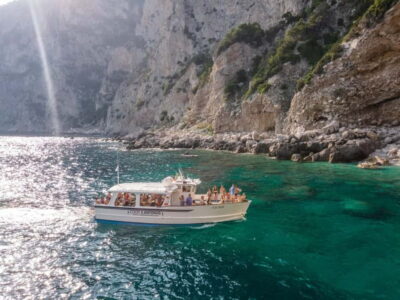

Day Trip to Positano, Amalfi & Ravello from Sorrento
Read our review →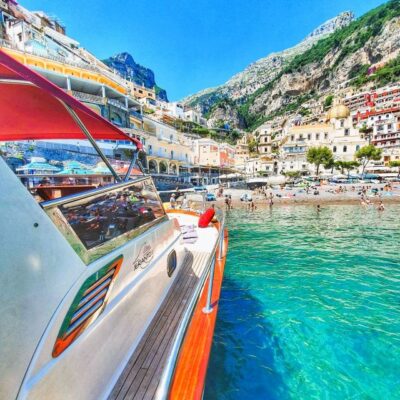
Positano and Amalfi Boat Trip with Transfer
Read our review →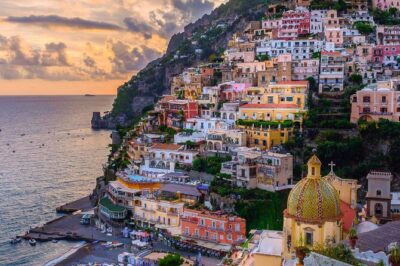
Full-Day Amalfi Coast Experience from Sorrento, Naples or Salerno
Read our review →
Positano, Amalfi and Ravello Sharing Tour from Sorrento
Read our review →
Private Amalfi Coast Day Tour from Sorrento or Naples
Read our review →
Amalfi and Positano Full-Day Trip by Boat
Read our review →
Full Day Private Amalfi Coast Tour from Sorrento or Naples
Read our review →Browse the lists this tour appears in