
Reviewed · POMPEII DAY TRIPS FROM SORRENTO
Pompeii and Herculaneum from Sorrento or Naples
Vesuvius still feels close today. This tour takes you from Sorrento or Naples to two Roman cities shaped by one eruption, with guided walking time at both Pompeii and Herculaneum. You ride in air-conditioned comfort, watching the Bay of Naples and Mount Vesuvius along the way, then get moving quickly once you arrive.
What I like most is the small-group format. Pompeii and Herculaneum are handled with tight walking tours, so you spend less time herding and more time looking at details that matter. I also like the fast-entry approach, which helps you avoid the worst delays and start your walking while the ruins are still fresh and readable.
One thing to plan for: entrance fees are extra. Pompeii and Herculaneum tickets are not included in the tour price, so you’ll want to budget those euros (and keep them ready so the morning stays smooth).
In This Review
- Key things to know before you go
- Getting to the ruins from Sorrento or Naples (without losing your day)
- What the schedule actually feels like in real time
- Pompeii Archaeological Park: your 3-hour hit of Roman street life
- The main trade-off at Pompeii
- Practical tip
- Herculaneum: smaller city, sharper details
- One consideration
- Comparing the two: one volcano, two different city stories
- Price and value: what you pay, what you still need
- Who this tour is best for
- Small-group walking tours, big impact
- Weather, comfort, and what to bring
- Should you book this Pompeii and Herculaneum tour?
- FAQ
- How long is the Pompeii and Herculaneum tour?
- What time does the tour start?
- Do I need to pay entrance fees separately?
- Are food and drinks included?
- Where does the tour depart from?
- What group size should I expect?
- Are there any age-related discounts?
- Is there free cancellation?
- Is the tour guided in English?
Key things to know before you go
- Small-group walking tours at both sites, designed to keep the pace human (max 8 for the guided walks).
- Air-conditioned transport from Sorrento or Naples, with Bay of Naples and Vesuvius views on the drive.
- Time built around walking (about 3 hours at Pompeii and 2 hours at Herculaneum).
- Skip-the-line style entry, so you’re not stuck waiting while the day slips away.
- Two city experiences, two preservation styles, so you compare how the same disaster can look totally different.
- English-speaking driver and guide, with taxes, parking, tolls, and fuel included.
Getting to the ruins from Sorrento or Naples (without losing your day)
The big value here is not just the destinations, it’s how you get there. Instead of piecing together buses, transfers, and slow entry, you start with a morning departure at 8:00 am and ride in a minivan (or minibus for larger groups) with an English-speaking driver. The ride is set up to be comfortable, including air-conditioned transportation, which matters when you’re facing sun and crowds later.
As you travel, you get those classic sightlines over the Bay of Naples and toward Mount Vesuvius. This is a small moment, but it helps your brain “place” the story before you ever reach the gates. I like tours that give you that first mental map early, because Pompeii and Herculaneum stop being names on a sign and start feeling like real towns tied to real geography.
Group size also plays a role in how your day feels. This tour has a maximum of 19 travelers, but the guided walking time is structured around either a smaller max group (up to 8) or a larger group model (9 to 19). In practice, that helps keep the guide interaction workable even if you’re not in a private car.
What the schedule actually feels like in real time
The outing runs about 8 hours total, with guided walking time at both sites. You’ll get around 3 hours at Pompeii and around 2 hours at Herculaneum. That timing is important. It’s long enough to see major areas and learn how daily life worked, but it’s not so long that you lose focus after hours of stone walls.
The “skip the long lines” part matters too. Pompeii and Herculaneum can be a waiting-game during peak seasons. When you’re not spending that time at the ticket and entry bottlenecks, your guided time feels more useful. You’re not trying to squeeze learning into the last 45 minutes.
Your day ends back at the meeting point. That’s a quiet win if you hate last-minute transit planning after a long day of walking.
Smaller than Pompeii, just as frozen in time
- Guided Day Tour of Pompeii and Herculaneum with Light Lunch
★ 4.5 · 311 reviews - Sorrento: Pompeii & Herculaneum Tour with Skip-the-Line
★ 4.6 · 125 reviews - Pompeii, Herculaneum and Winery on Vesuvius with an Archaeologist
★ 5.0 · 89 reviews - Herculaneum: 2-Hour Skip-the-Line Tour from Sorrento
★ 4.0 · 46 reviews
Pompeii Archaeological Park: your 3-hour hit of Roman street life
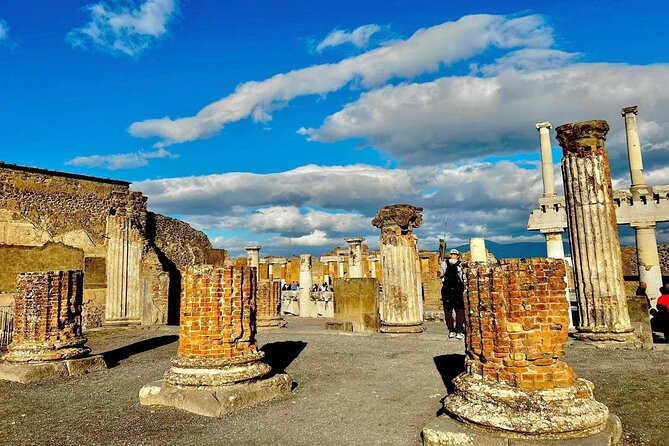
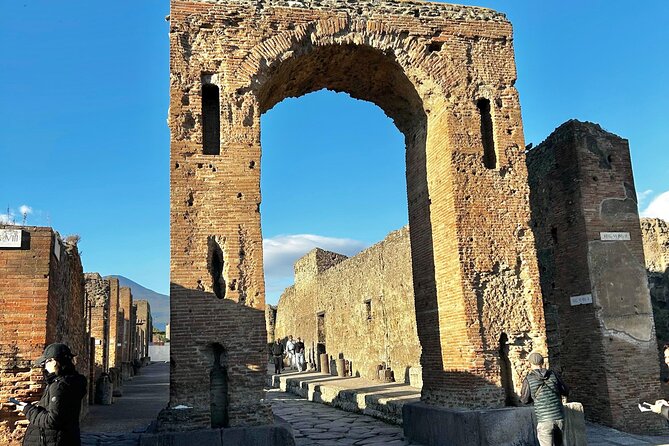
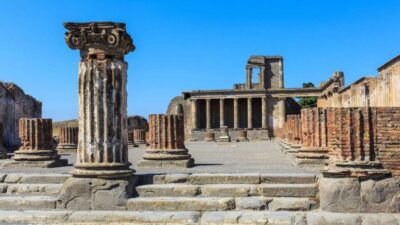
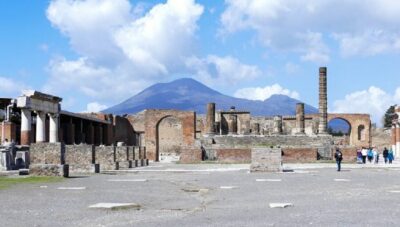
Pompeii is the “big name” for a reason. It’s the most visited archaeological site on the Italian peninsula, and walking it can feel like stepping into a city block that got interrupted mid-life. You’ll get about 3 hours with a guided walking tour, which is the right length to see why Pompeii became the world’s go-to example of a town frozen by disaster.
What makes Pompeii special is its sheer scale as an open-air museum. You can literally walk through places that were buried in ash until 1748, and the result is a city you read by moving. During your time there, focus on how people lived: thresholds and doorways, street layouts, and everyday spaces where work, shopping, and social life would have happened.
The main trade-off at Pompeii
You’re working with time and crowds. Pompeii can be wide, and you won’t see everything. The best mindset is to follow the guide’s order and take photos only when you pause. If you run ahead, you can end up with a lot of “I saw ruins” and not enough “I understood this place.”
Practical tip
Wear shoes you trust. You’re walking ruins, and the surfaces are not like polished museum floors. If your feet get unhappy early, the rest of the city will feel longer than it should.
Walk streets frozen since 79 AD
Herculaneum: smaller city, sharper details
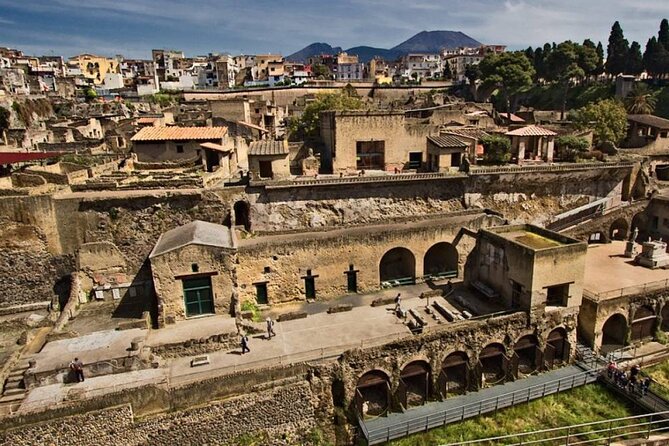
If Pompeii is the headline act, Herculaneum is the reason many people walk away stunned. It’s smaller, and that size changes everything. You get about 2 hours here, but the feel is different because Herculaneum is known for the quality of its preservation, including structures and fine details.
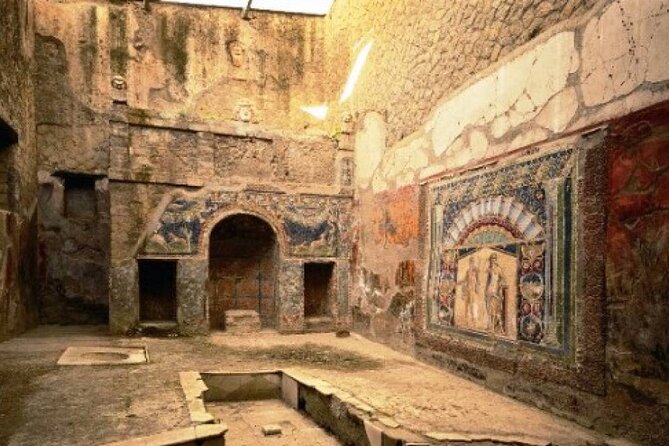
The eruption’s impact looks “different” at Herculaneum. Volcanic flows were hotter and more forceful here, and yet the city is often described as having more intact remains. You’ll see patrician villas in a condition that can feel almost surprising after two millennia. Details like brickwork, mosaics, and frescoes are part of the story, and that visual richness is the payoff for slowing down and looking closely.
There’s also something emotionally satisfying about Herculaneum’s scale. You spend less time crossing large distances and more time absorbing the way rooms connect to daily routines. It’s easier to connect what you’re seeing to what people might have done there.
One consideration
Because the time is shorter, you’ll want to listen early and ask questions if anything clicks for you. If you chat through the most important segments, you lose the chance to compare how Herculaneum’s preservation changes the way you interpret Roman life versus Pompeii.
Comparing the two: one volcano, two different city stories
What makes this tour feel better than a single-site visit is the built-in comparison. You’re not just collecting facts about Pompeii and Herculaneum as separate attractions. You’re comparing two Roman places affected by the same disaster, which can change how you understand architecture and daily routines.
In Pompeii, you read the city by street and district scale, seeing how the layout and public life shaped movement. In Herculaneum, you often read by the condition of interiors, seeing how decorative elements and household details survived in a way that can feel more immediate.
That contrast is also why the guide matters. If someone points out “look for this kind of detail” at each stop, you don’t just see ruins. You start building a picture of ordinary life and sudden catastrophe as a single shared event with different outcomes.
Price and value: what you pay, what you still need
The tour price is listed as $188.90 per person. That covers the day’s structure: transport, guiding, taxes, parking, tolls, and fuel. It also covers the guided walking format: a walking tour through Pompeii for up to 8 people, and a walking tour through Herculaneum for up to 8 people, with driver and guide time across the excursion.
The part you must budget separately is entrances:
- Pompeii entrance fee: €19 per person
- Herculaneum entrance fee: €16 per person
So your total cost is more than the headline figure once you add both sites. For me, the value comes from time saved and the two-site comparison with guided walking. If you’re planning to visit both places anyway, this format can be a smart way to avoid spending your day figuring out transit and entry logistics.
Also note: food and drinks are not included. That means you should plan to buy something on your own or bring snacks if you’re allowed where you’re stopping. The tour itself is focused on ruins time, not a built-in meal.
Who this tour is best for
This one is a good fit if you want a guided day without getting lost in details that take forever on your own. It’s also a solid option if you’re short on time and want both Pompeii and Herculaneum in a single day.
You’ll probably enjoy it most if:
- You like a structured route and a guide to help you notice what matters
- You want small-group walking tours rather than a large herd
- You’re okay with a long morning and comfortable walking shoes
- You prefer English-speaking help rather than self-guided reading
If you’re the type who needs “every street, every building,” then 3 hours at Pompeii and 2 hours at Herculaneum may feel limiting. For that style of visitor, you might choose a deeper multi-day plan instead. But if you want a meaningful, well-paced overview of both cities, this hits the sweet spot.
Small-group walking tours, big impact
There’s a reason guided walking time is separated between the two sites. When a guide can work with fewer people, you get faster pacing and more chances to ask questions. It also helps you keep moving through the “see everything” temptation.
The max group size structure matters too. When it’s up to 8 people for the guided walks, you’re less likely to spend the day behind someone who moves slowly. When it’s 9 to 19, you’re still not in chaos, because the tour shifts to a model with a minibus, driver, and English-speaking guide for the entire excursion.
That’s a practical balance. You get organization without paying private-tour prices.
Weather, comfort, and what to bring
You’ll be outside for most of the experience. Even with an air-conditioned ride, you’ll still face sun, heat, or wind depending on the season. Bring a hat if you use one, and plan water for yourself, since food and drinks are not part of the package.
Your shoes matter more than your outfit. You’ll walk through archaeological areas, and you want stable footing.
Also think ahead about tickets. Entrance fees are extra, so keep that in mind before the morning gets started.
Should you book this Pompeii and Herculaneum tour?
I think this is a smart booking if your priority is a guided, efficient day with a strong comparison between Pompeii and Herculaneum. The structure makes sense: early departure, air-conditioned transport, guided walks timed to the amount of ruin you can realistically absorb, and entrance arrangements designed to reduce waiting.
Skip it if you want to spend all day in one site, or if you’d rather pay less and self-tour without any guide direction. Entrance fees are additional, so if you’re trying to minimize total cost, you should calculate your final spend before committing.
If you want a day that feels organized, not stressful, this tour is built for that. You’ll leave with a clearer picture of Roman daily life, and you’ll also understand how the same eruption can preserve a place in totally different ways.
FAQ
How long is the Pompeii and Herculaneum tour?
The tour runs about 8 hours.
What time does the tour start?
The start time is 8:00 am.
Do I need to pay entrance fees separately?
Yes. Pompeii entrance fees are €19 per person, and Herculaneum entrance fees are €16 per person. These are not included in the tour price.
Are food and drinks included?
No. Food and drinks are not included.
Where does the tour depart from?
It departs from either Sorrento or Naples.
What group size should I expect?
For the walking tours, it is designed for up to 8 people. The overall maximum is 19 travelers.
Are there any age-related discounts?
Children under 18 enter for free at Pompeii and Herculaneum with a valid form of ID.
Is there free cancellation?
Yes, you can cancel up to 24 hours in advance for a full refund.
Is the tour guided in English?
Yes. The guide and driver are English-speaking. The tour also uses a mobile ticket.
New on the Sorrento coast






Pompeii Day Trips from Sorrento, compared.

Priority Access Pompeii & Mt. Vesuvius Full day from Sorrento
Read our review →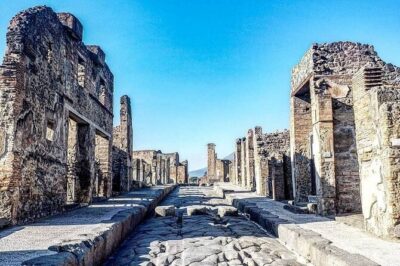
Pompeii Express Guided Tour by Train from Sorrento
Read our review →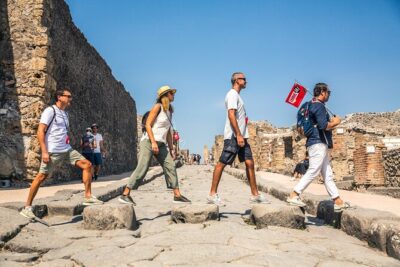
Skip-the-Line Pompeii Guided Tour from Sorrento
Read our review →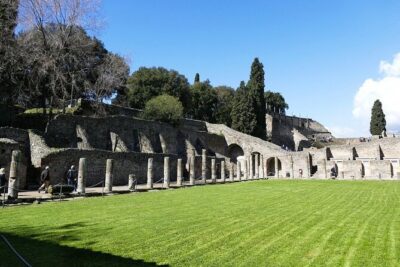
Pompeii Ruins Half-Day Tour from Sorrento with Guide
Read our review →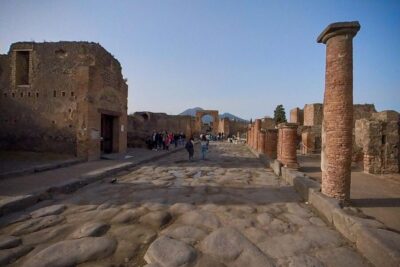
Pompeii and Vesuvius Guided Tour with Lunch
Read our review →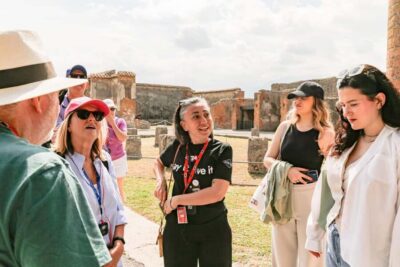
Day Tour to Pompeii Ruins and Mount Vesuvius
Read our review →Browse the lists this tour appears in